day-trips
Day Trips from Baeza: Olive Country, UNESCO Towns & Wild Sierras
This post may contain affiliate links, which means I earn a small commission, at no extra cost to you. It helps keep the blog alive, and we really appreciate your support!

Baeza sits at the centre of Spain's best-kept secret region. These day trips reveal why Jaén province deserves far more attention than it gets.
The most popular day trip from Baeza is Úbeda, just 9km away and equally UNESCO-listed. It's less a day trip and more an afternoon stroll.
My personal favourite is the Sierra de Cazorla, Spain's largest protected natural area, just 50 minutes east. The Guadalquivir begins there, deer outnumber people, and the landscapes shift from olive groves to pine forests to limestone peaks.
Granada and Córdoba are both about 1.5 hours away. And olive mill tours are an essential experience in a province that produces 20% of the world's olive oil.
Day Trips from Baeza
Quick reference guide
| Destination | Distance | Must-See |
|---|---|---|
| Úbeda | 9km / 15 min | Plaza Vázquez de Molina |
| Sierra de Cazorla | 45km / 50 min | Guadalquivir headwaters |
| Jaén | 48km / 45 min | Cathedral & Santa Catalina castle |
| Olive mill tour | Various | Fresh-pressed oil tasting |
| Sabiote | 12km / 15 min | Renaissance castle & pottery |
| Iznatoraf | 35km / 40 min | Panoramic mountain views |
| Granada | 115km / 1.5h | The Alhambra |
| Córdoba | 105km / 1.25h | The Mezquita |
A car is essential for most trips. Public transport is very limited in Jaén province.
Úbeda
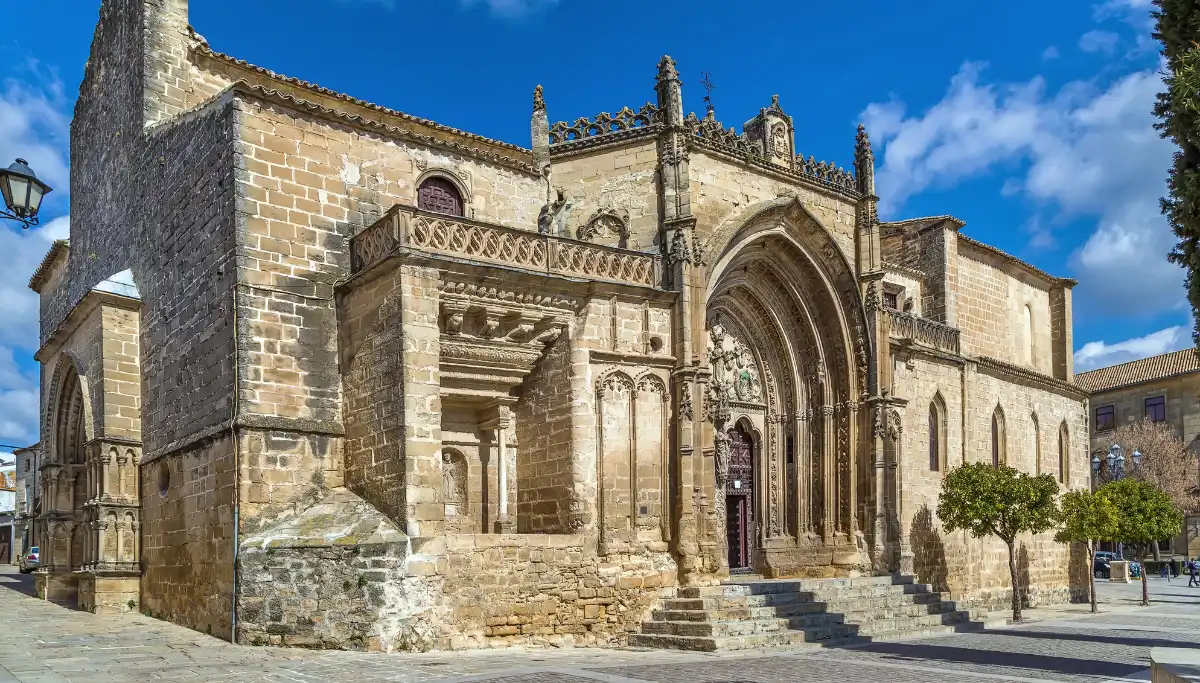
Úbeda is just 9km from Baeza, making it less a day trip than an extension of your stay. The two UNESCO-listed towns are twins, both Renaissance masterpieces, both overlooked by mass tourism.
If Baeza is the quieter, more intimate jewel, Úbeda is the grander, more ambitious one. The Plaza Vázquez de Molina is one of Spain's finest squares, anchored by the Sacra Capilla del Salvador, a Renaissance chapel so perfect it would be famous anywhere else in Spain.
Úbeda also has a stronger craft tradition. The town is known for esparto grass weaving and distinctive green-glazed pottery. Wander the workshops along Calle Valencia to see artisans at work.
Visit late afternoon when tour groups have left and the golden stone glows in evening light. The Parador de Úbeda occupies a Renaissance palace on the main square, and even if you're not staying, it's worth stopping for a drink in the courtyard.
Sierra de Cazorla
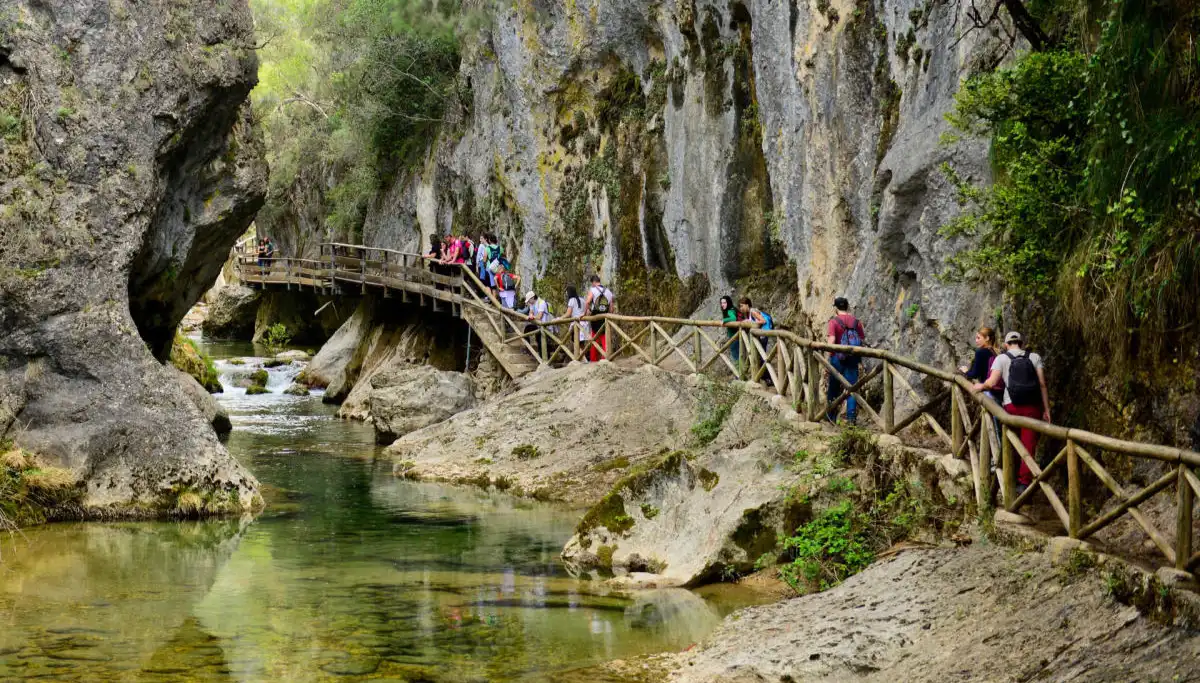
The Sierra de Cazorla is Spain's largest protected natural area, and it's just 50 minutes from Baeza. This is where the Guadalquivir River begins, where deer outnumber people, and where the landscapes are genuinely wild.
Cazorla town is the gateway, climbing a hillside beneath a ruined castle. It's a good place for lunch and an authentic taste of mountain Spain. From there, park roads wind deeper into the mountains.
The Cerrada de Elías is a short, dramatic walk along a riverside gorge with wooden walkways clinging to cliff faces. Easy enough for families, spectacular enough to be worthwhile. The Nacimiento del Guadalquivir is a pleasant walk through pine forests to the spring where Andalusia's great river emerges.
The park has limited services, so bring food and water, fill your petrol tank before entering, and don't rely on mobile signal. Spring brings wildflowers and waterfalls at full flow. Autumn is deer rutting season with golden colours. A full day barely scratches the surface.
Jaén
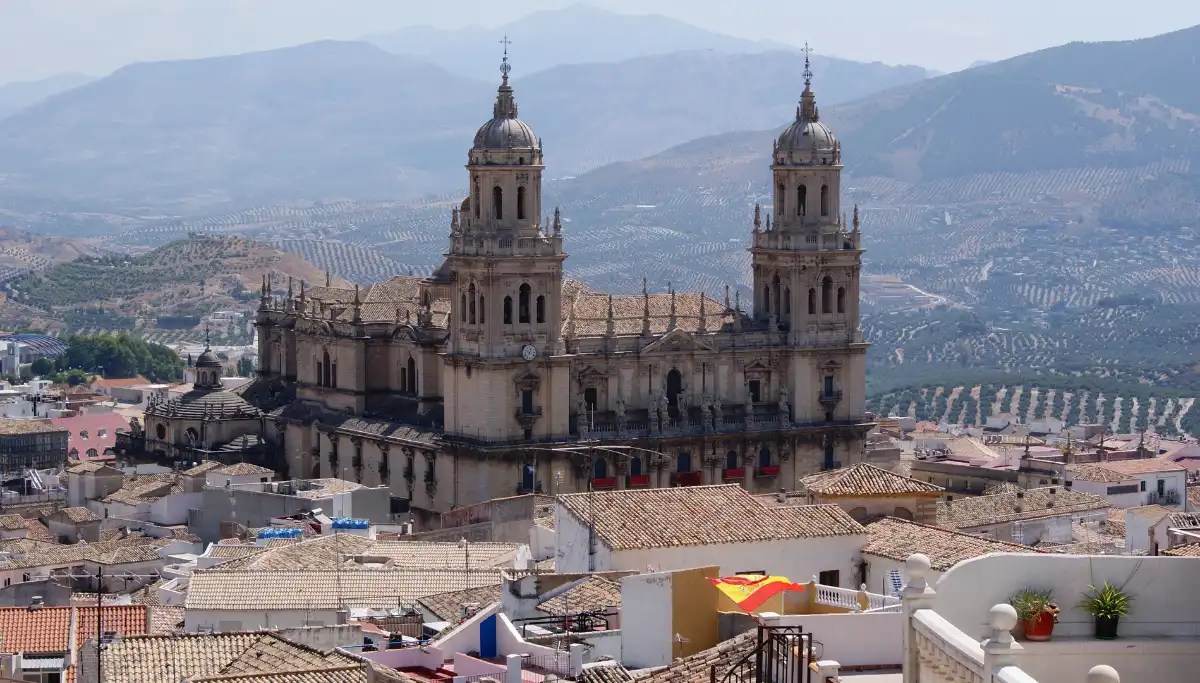
Jaén is the capital of olive oil country, and one of Andalusia's most underrated cities. The Renaissance cathedral rivals any in Spain, the hilltop Castillo de Santa Catalina offers panoramic views, and the tapas bars serve some of the region's best food at local prices.
The cathedral is often called Spain's finest Renaissance church. The facade is a masterpiece, and the interior is vast and light-filled. Don't miss the Santo Rostro relic.
The climb to Santa Catalina castle is steep but the views over endless olive groves are unforgettable. There's a parador here if you fancy staying overnight. Below in the old town, the Arab Baths are the largest preserved in Spain, dating from the 11th century.
Jaén's tapas bars still give you a free tapa with every drink, the authentic tradition that's dying out in more touristy cities. Bar hop along Calle Cerón and Calle Arco del Consuelo for the best concentration.
Olive Mill Tours
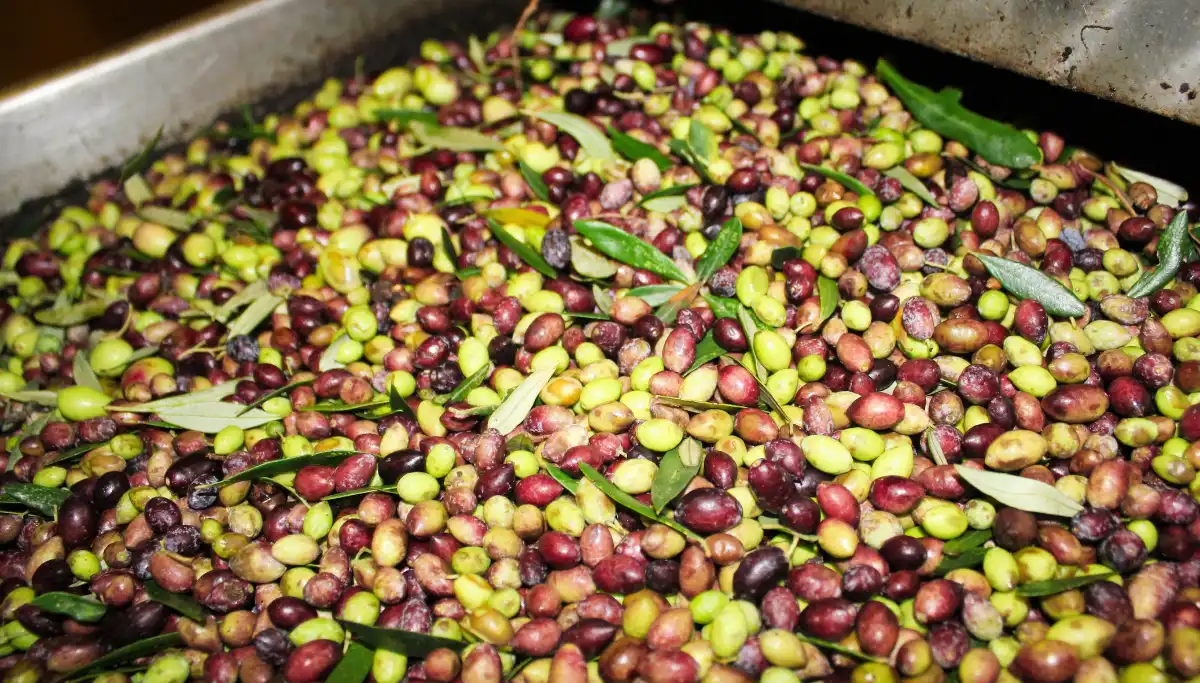
Jaén province produces 20% of the world's olive oil. A fifth of all olive oil on earth comes from these hills. An olive mill tour is less a day trip than an essential cultural experience.
A typical tour includes the groves, the production process (if visiting during harvest), a tasting of different varieties, and the chance to buy directly from the source. Buying oil at a mill costs a fraction of retail, often just 5-8 euros per litre for excellent quality.
Oleícola San Francisco in Begíjar (20 minutes) is a traditional family mill with excellent tours. Castillo de Canena (15 minutes) is a boutique producer known for innovative infused oils and a stunning castle setting. Almazara Picualia in Bailén (30 minutes) runs comprehensive tours explaining the entire industry.
Visit during harvest season (November to January) to see mills in full production. The smell of fresh-pressed oil is unforgettable, and aceite nuevo (new oil) at its freshest is peppery, grassy, and nothing like what you buy in supermarkets.
Sabiote
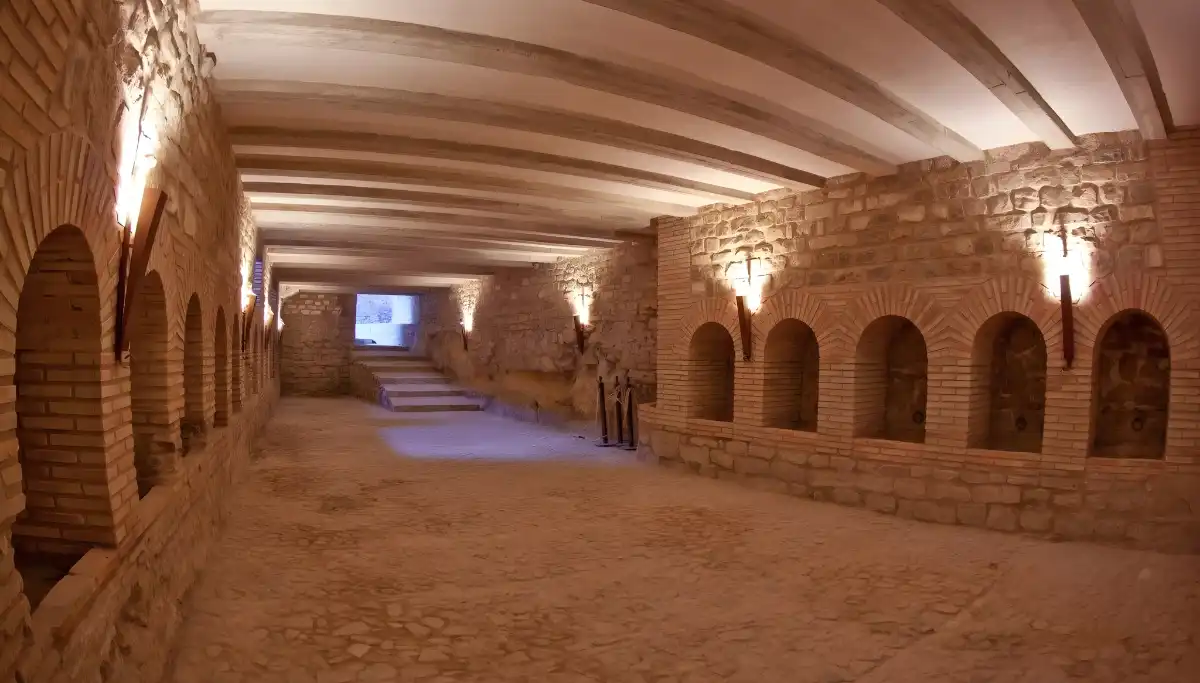
Sabiote is the kind of place that makes you wonder why anyone bothers with tourist crowds. Just 12km from Baeza, this small town has a magnificent castle, beautiful Renaissance churches, and a living pottery tradition, yet you'll likely have it to yourself.
The castle was transformed from Moorish fortress to Renaissance palace by Francisco de los Cobos (the same patron who shaped Úbeda). The views from the ramparts stretch across olive country to the Sierra de Cazorla.
Several family pottery workshops continue a centuries-old tradition, producing distinctive green-glazed ceramics. Watching a potter throw a pot is genuinely fascinating, and the prices are far better than tourist shops. Ask at the tourist office for current workshop recommendations.
Iznatoraf
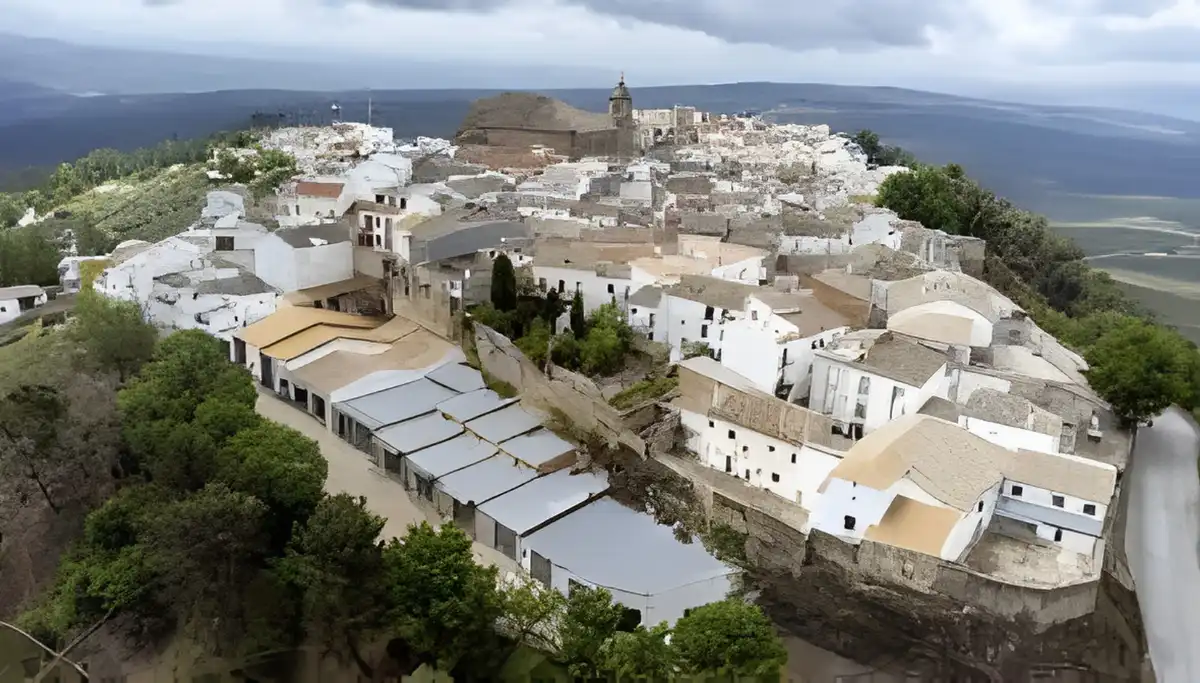
Iznatoraf is known as the "Balcón del Mundo" (Balcony of the World), sitting on a hilltop at 1,000m elevation. The views are genuinely spectacular, with olive groves stretching to the horizon in one direction and the peaks of Cazorla rising in another.
Iznatoraf isn't about specific sights. It's about atmosphere. The medieval streets wind between whitewashed houses. The main plaza has a handful of bars serving local wine and tapas. And the viewpoints offer some of the finest panoramas in Jaén province.
Arrive for sunset. The light over the olive sea as it fades is extraordinary. Combine it with nearby Villacarrillo (known for its cheese) and Villanueva del Arzobispo for a pleasant half-day circuit through the olive country north of Baeza.
Granada
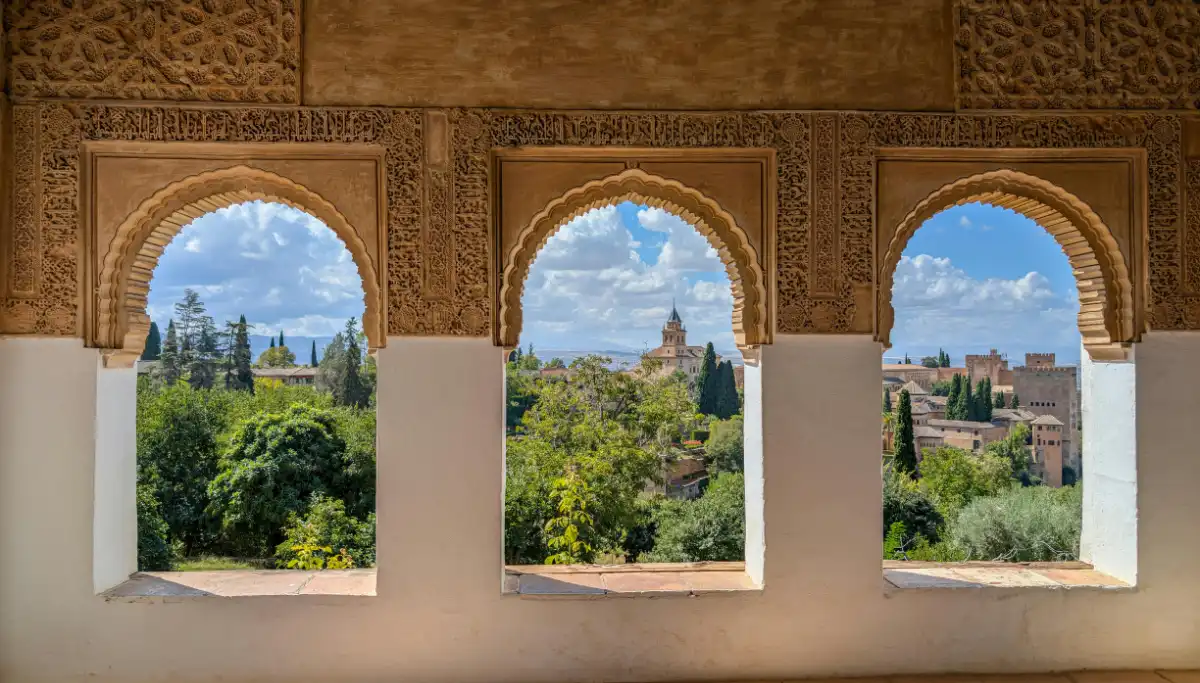
Granada is a longer trip (115km, about 1.5 hours), but the Alhambra makes it worth every minute. This Moorish palace complex is one of Europe's most remarkable monuments.
Book tickets weeks in advance. The Nasrid Palaces have timed entry, and slots sell out fast, even in winter. Plan your entire day around your ticket time. Allow 3-4 hours for the full visit.
After the Alhambra, wander the Albaicín neighbourhood for lunch with views back to the palace. Granada also has free tapas with drinks, which is always welcome after a morning of sightseeing.
Córdoba
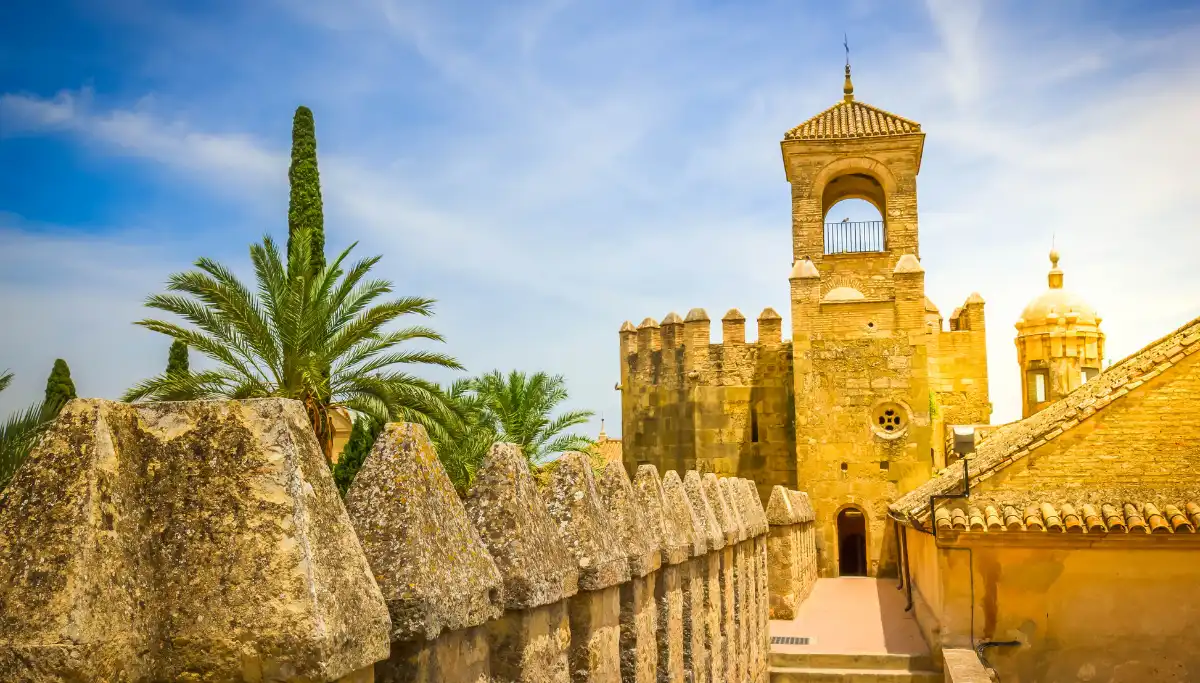
Córdoba is roughly equidistant from Baeza (105km, about 1.25 hours) and offers one of Spain's most remarkable buildings, the Mezquita. A forest of red and white arches surrounds a Renaissance cathedral built inside a medieval mosque.
Visit the Mezquita first thing in the morning, when light streams through the arches and the crowds are smaller. The effect is magical. Then wander the narrow streets of the Judería (Jewish Quarter), and the Alcázar de los Reyes Cristianos and its gardens.
If visiting in May, try to coincide with the Festival de los Patios, when residents open their flower-filled courtyards to visitors. It's a UNESCO-listed tradition and genuinely beautiful.
Getting Around
A car is essential for most destinations. Public transport is very limited in Jaén province. Úbeda has regular buses (15 minutes, around 2 euros), and Jaén and Granada have bus connections, but everything else really requires a car.
Fill up with petrol in Baeza, as rural stations can be sparse. Carry water, especially in summer, and check opening hours, as smaller attractions may close for siesta.
Final Recommendation
Úbeda is unmissable since it's 15 minutes away and equally UNESCO-listed. For nature, the Sierra de Cazorla delivers genuine wilderness. And don't skip the olive oil, because tasting fresh-pressed oil at a working mill will change how you think about this most basic of Mediterranean ingredients.
For more on planning your time, check out my guides to things to do in Baeza and where to eat.

Hola! I'm the researcher, walker, and co-founder behind Spain on Foot. I help travellers experience Spain authentically, through in-depth guides, locals-only knowledge, and cultural stories you won't find in guidebooks. You can reach me at heidi@spainonfoot.com
Planning a trip to Baeza?
Explore Baeza Guide→