things-to-do
20 Best Things to Do in Cordoba: A Guide to Spain's Most Underrated City
This post may contain affiliate links, which means I earn a small commission, at no extra cost to you. It helps keep the blog alive, and we really appreciate your support!

The Mezquita alone makes Cordoba worth the trip.
Cordoba doesn't shout for attention like Seville or Granada. It doesn't need to.
In the 10th century, this was the largest city in Western Europe, the capital of Al-Andalus, and one of the most advanced centres of learning in the world.
The Great Mosque built here remains one of humanity's most extraordinary architectural achievements.
Cordoba at a Glance
Compare hotel prices in Cordoba
Find the best deal across booking sites
Arrive early for free entry to the Mezquita, wander the flower-filled patios of the Alcázar Viejo, and get lost in the Jewish Quarter's winding streets. A sunset walk across the Roman Bridge is one of the best moments in Andalusia. And don't leave without trying salmorejo at a traditional taberna.
The Mezquita and Surrounds
1. The Mezquita-Cathedral
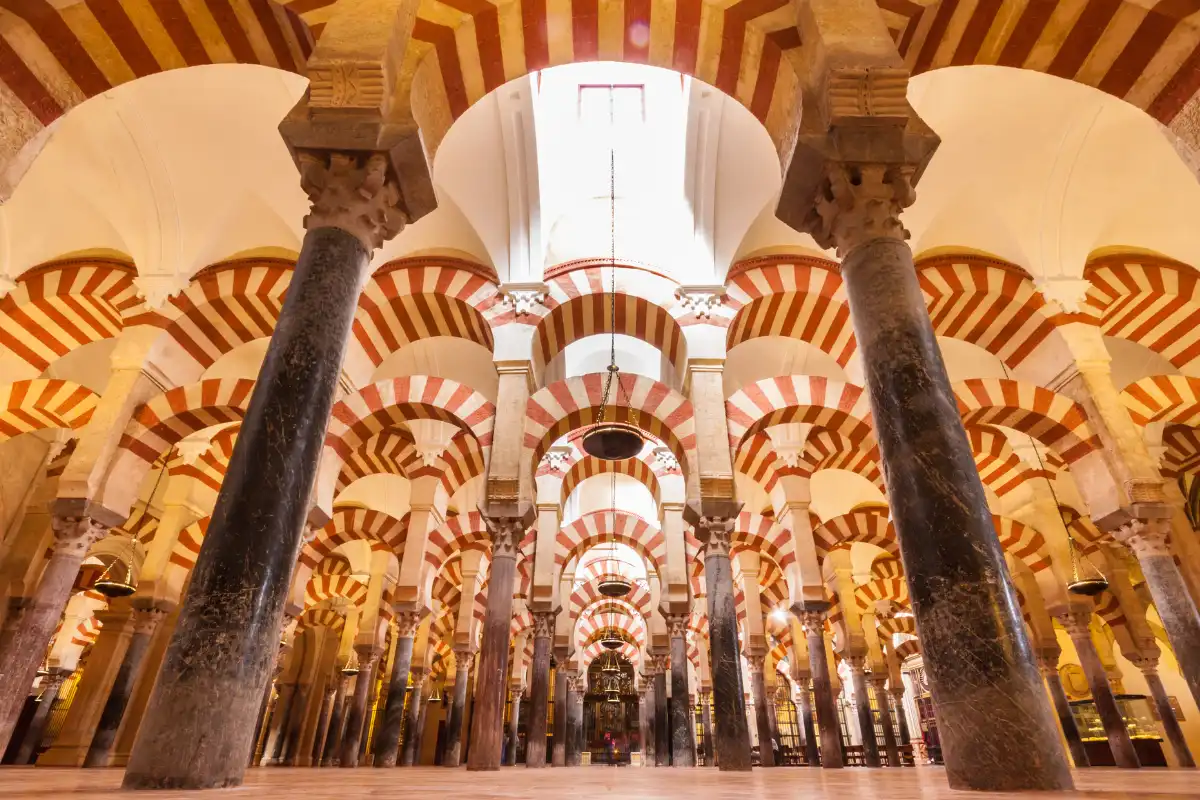
The Mezquita-Cathedral is one of the most remarkable buildings on Earth. Nothing quite prepares you for stepping inside.
A forest of over 850 columns stretches before you, supporting double arches in alternating red and white stone. The effect is hypnotic, almost infinite. Light filters through in ways that seem designed to inspire contemplation.
Construction began in 784 AD under Abd ar-Rahman I, who built the mosque on the site of a Visigothic church. Over the next 200 years, successive rulers expanded it into the largest mosque in the western world.
When Christians conquered Cordoba in 1236, they were so awed by its beauty that they preserved it, converting it into a cathedral by building a Renaissance nave in the centre. King Charles V later famously said: "You have built what you or others might have built anywhere, but you have destroyed something that was unique in the world."
He was right. But the fusion of Islamic and Christian architecture creates something equally extraordinary, a physical record of Spain's complex history.
Mezquita-Cathedral
One of the world's most important monuments. A 10th-century mosque with a Renaissance cathedral built inside. The forest of columns and double arches is unforgettable.
Tip:
The Mezquita offers free entry Monday-Saturday from 8:30-9:30am. This isn't advertised prominently, but it's genuine. You'll have about 45-50 minutes before staff begin ushering visitors out for morning mass at 9:30am. Arrive at 8:15am to queue and maximise your time inside.
2. Climb the Bell Tower
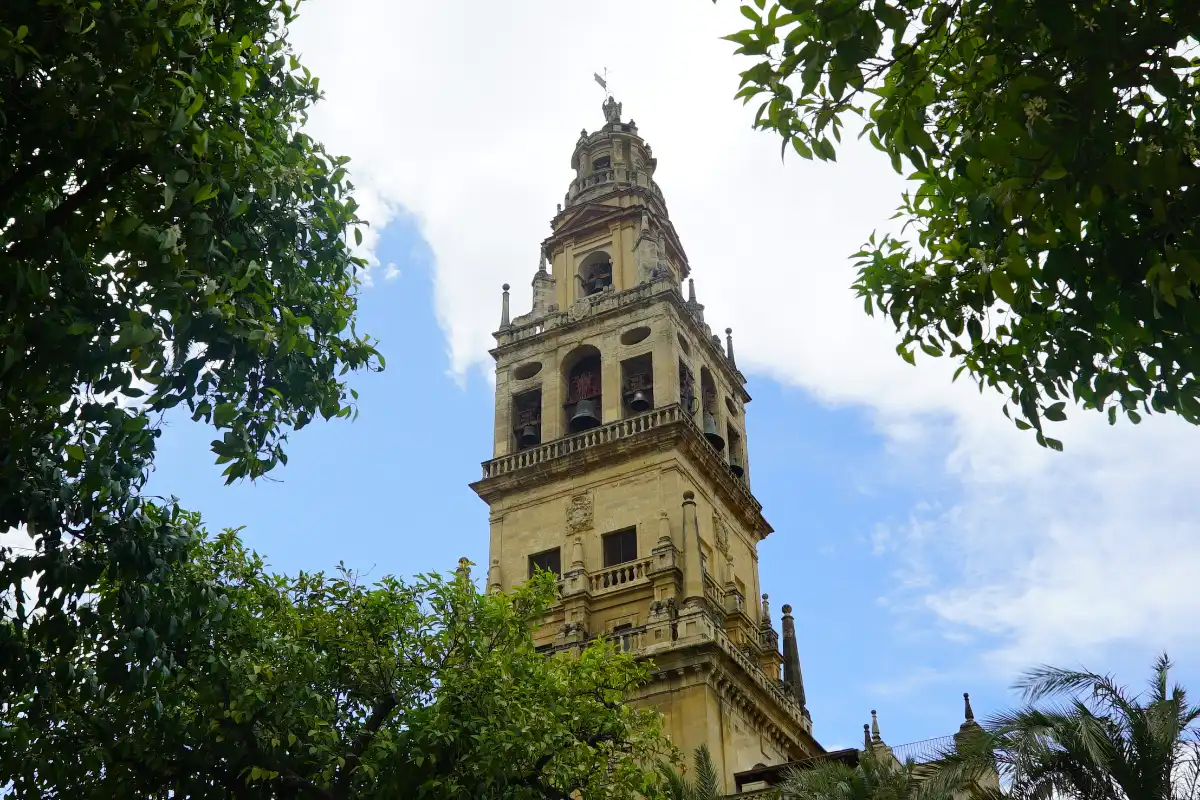
The Torre Campanario offers the best views over Cordoba's rooftops and the Mezquita's unique architecture from above. The tower was built in the 17th century on the base of the original minaret.
It's a separate ticket (€3) and requires booking a timed slot, but the panoramic views over the city, the Guadalquivir River, and the Sierra Morena mountains are worth it.
Book your time slot when purchasing Mezquita tickets. The climb involves narrow stairs but is manageable. Sunset slots offer the best light for photography.
3. Alcázar de los Reyes Cristianos
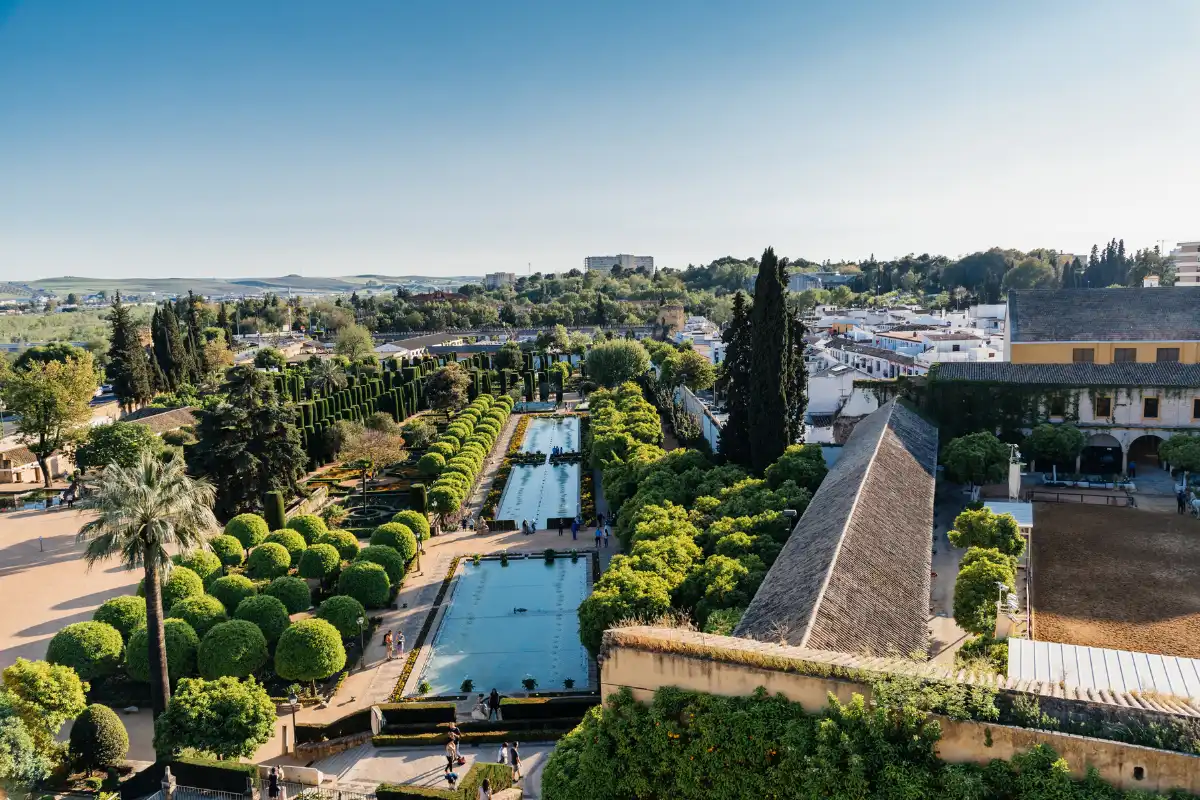
The Alcázar of the Christian Monarchs is a medieval fortress and palace where Ferdinand and Isabella based themselves during the final campaign against Granada. Christopher Columbus met with them here in 1486 to pitch his voyage to the Americas.
The building itself is impressive, but the star attraction is the gardens. Terraces of pools, fountains, and cypress trees stretch out behind the palace, offering one of Cordoba's most peaceful escapes.
Alcázar de los Reyes Cristianos
Medieval fortress with stunning tiered gardens featuring pools, fountains, and orange trees. Where Columbus pitched his famous voyage to the Catholic Monarchs.
4. Roman Bridge at Sunset
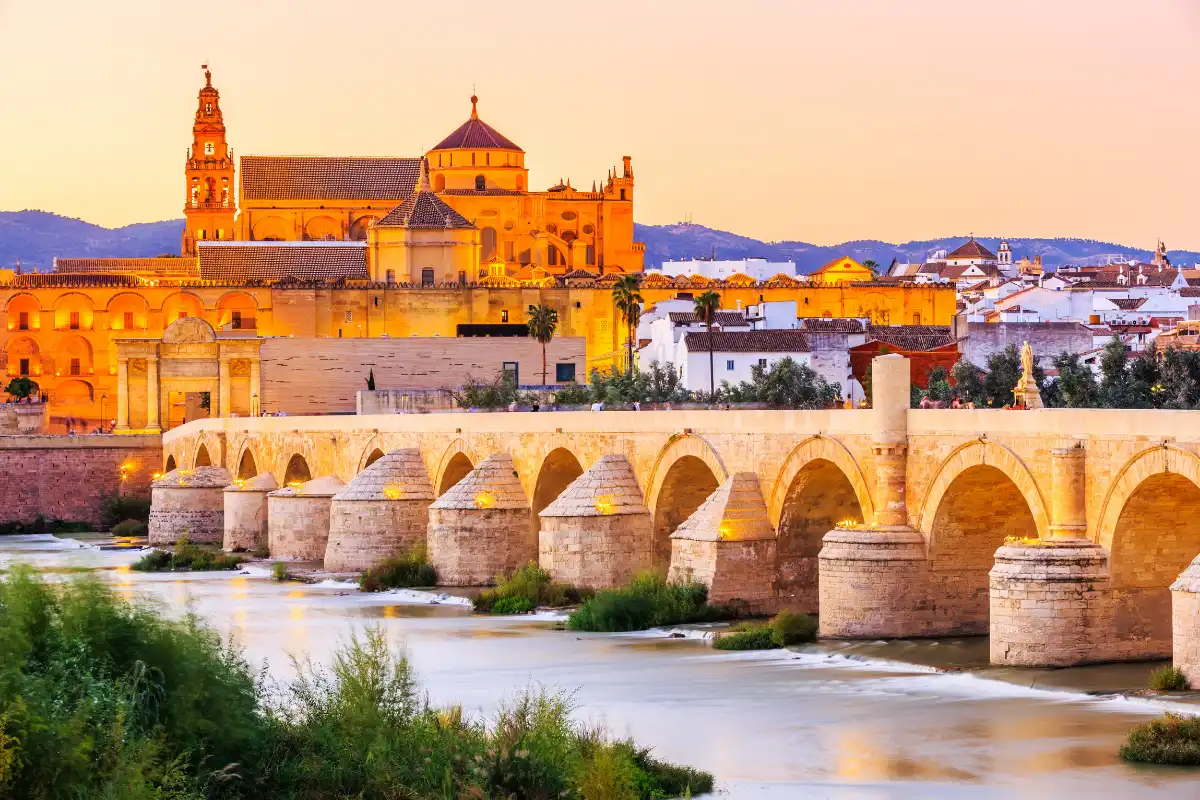
The Puente Romano spans the Guadalquivir River and has connected Cordoba to southern Spain for over 2,000 years. The current structure dates mostly from Moorish reconstruction, but it follows the original Roman route.
Walk across at sunset when the bridge is lit and the Mezquita glows behind you. It's one of Cordoba's most photogenic moments.
At the southern end stands the Torre de la Calahorra, a medieval tower now housing a museum about the three cultures that shaped Cordoba.
For the best photos, head to the modern bridge (Puente de Miraflores) and look back. Evening light turns everything golden. The bridge is pedestrianised, so take your time.
The Jewish Quarter
5. Wander the Judería
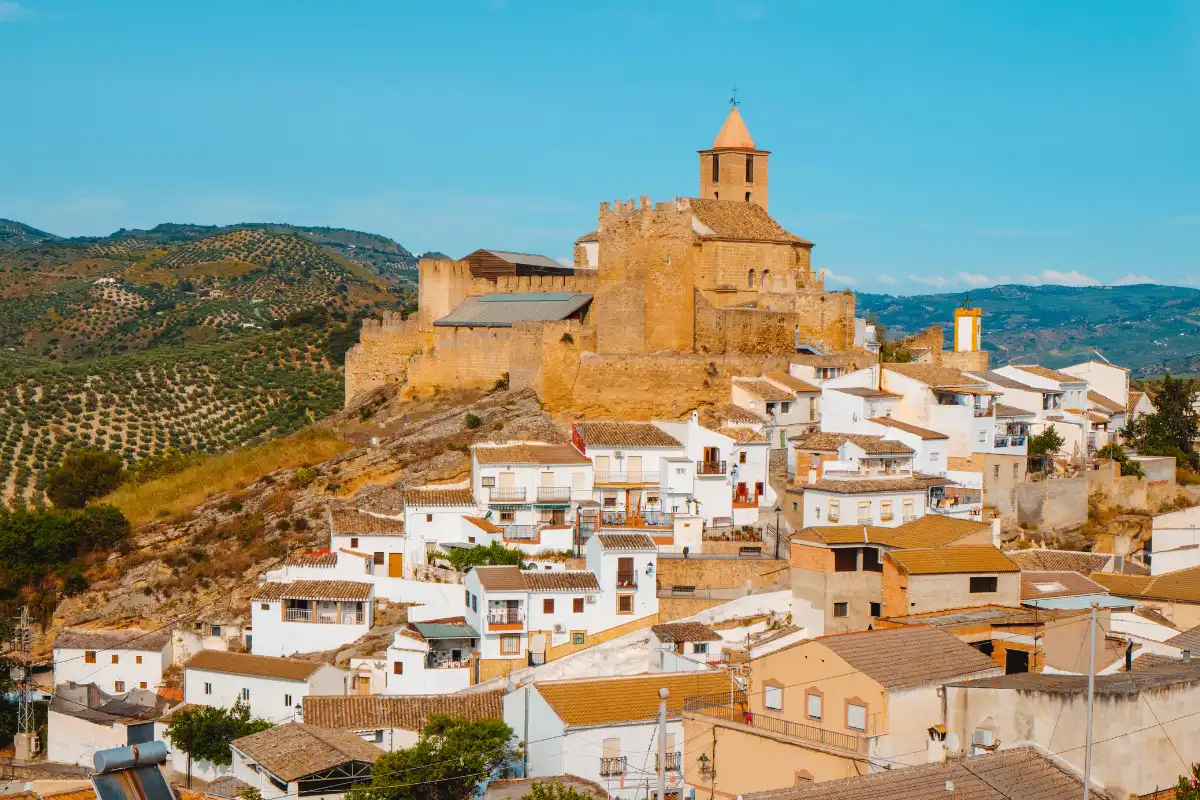
The Judería (Jewish Quarter) is a maze of whitewashed walls, flower-filled balconies, and streets so narrow two people can barely pass. This is where Cordoba's substantial Jewish population lived until their expulsion in 1492.
There's no right way to explore it. The joy is in getting lost, turning down alleyways that lead to hidden plazas, stumbling upon doorways framing glimpses of private patios.
The streets were designed narrow deliberately to provide shade from the brutal summer heat. It works. Even in August, the Judería stays cool.
Explore the Jewish Quarter
easyWander the atmospheric maze of Cordoba's ancient Jewish neighbourhood. Whitewashed walls, flower-filled balconies, hidden patios, and some of Spain's most photogenic streets.
6. Cordoba Synagogue
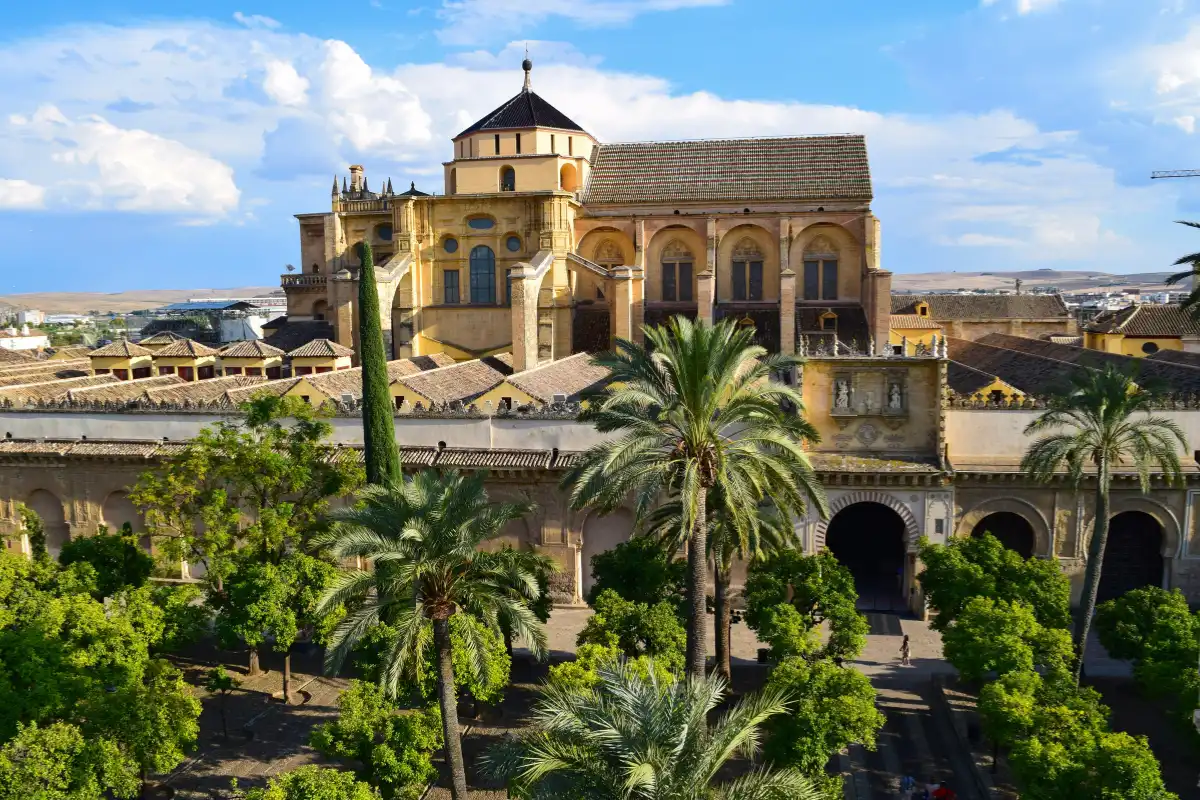
The Sinagoga de Córdoba is one of only three medieval synagogues remaining in Spain. Built in 1315 in Mudéjar style, it's tiny but exquisite, with intricate plasterwork covering the walls in geometric and floral patterns.
After the Jewish expulsion, it served as a hospital, a hermitage, and a shoemakers' guild hall before being rediscovered and restored in the 19th century.
Entry is free for EU citizens. You'll find it on Calle Judíos in the heart of the Judería, and it takes about 15-20 minutes to visit.
7. Calleja de las Flores
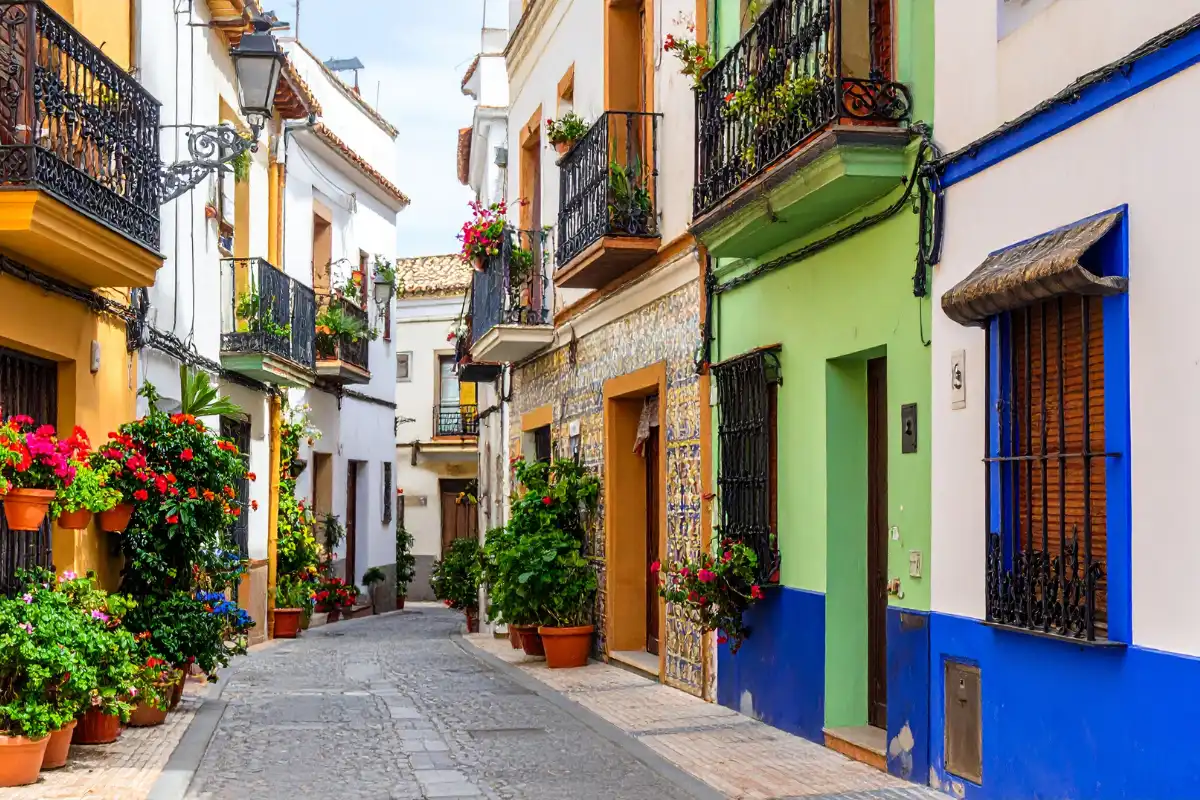
The Calleja de las Flores (Alley of Flowers) is Cordoba's most photographed street. A narrow passage opens to a small plaza framed by geranium-draped balconies, with the Mezquita's bell tower perfectly framed at the end.
It's tiny and can get crowded, but it encapsulates Cordoba's charm in a single frame. Visit early morning before 9am or late evening for photos without crowds. The light is better then anyway, since midday the street is so narrow it's mostly in shadow.
8. Casa de Sefarad
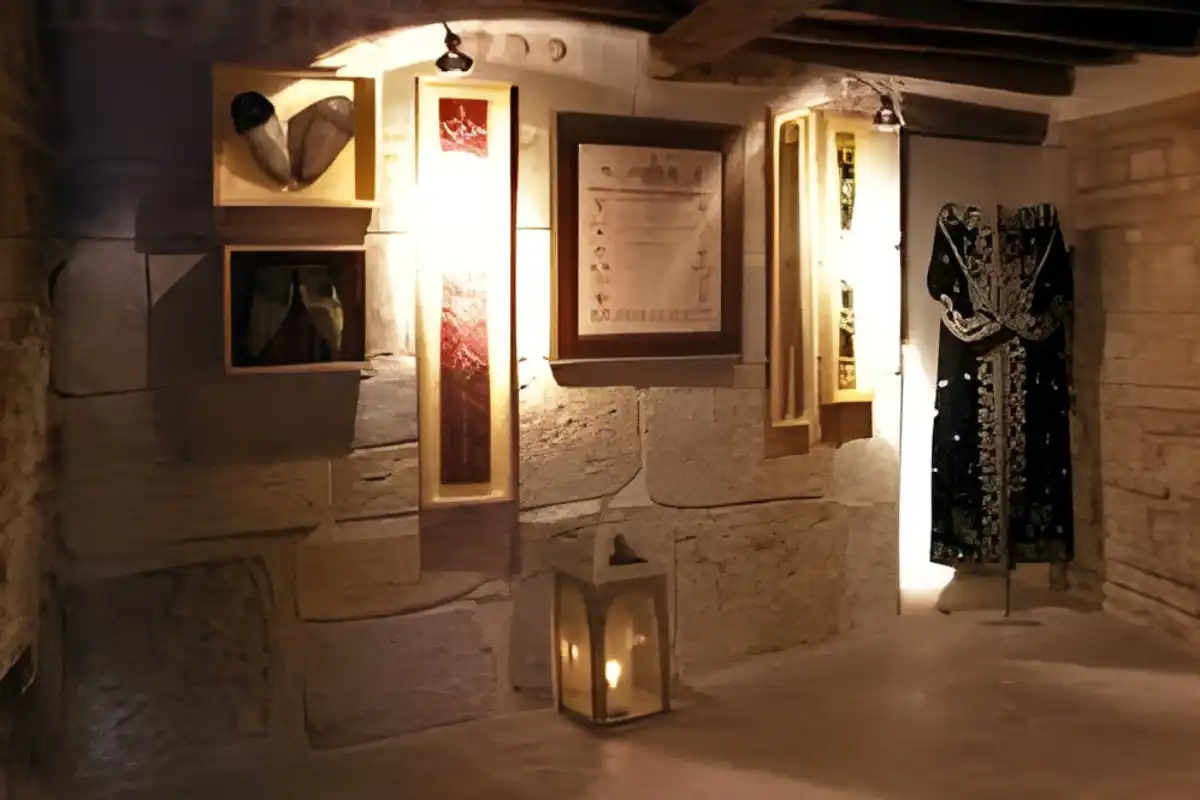
The Casa de Sefarad is a small museum dedicated to the Sephardic Jewish culture of Spain. Housed in a 14th-century building in the Jewish Quarter, it explores the history, traditions, music, and domestic life of Spanish Jews before and after the expulsion.
It's intimate and moving, filling in the human stories behind the historic streets. Entry is €5 and you'll want about 45 minutes.
The Patios of Cordoba
9. Visit Traditional Patios
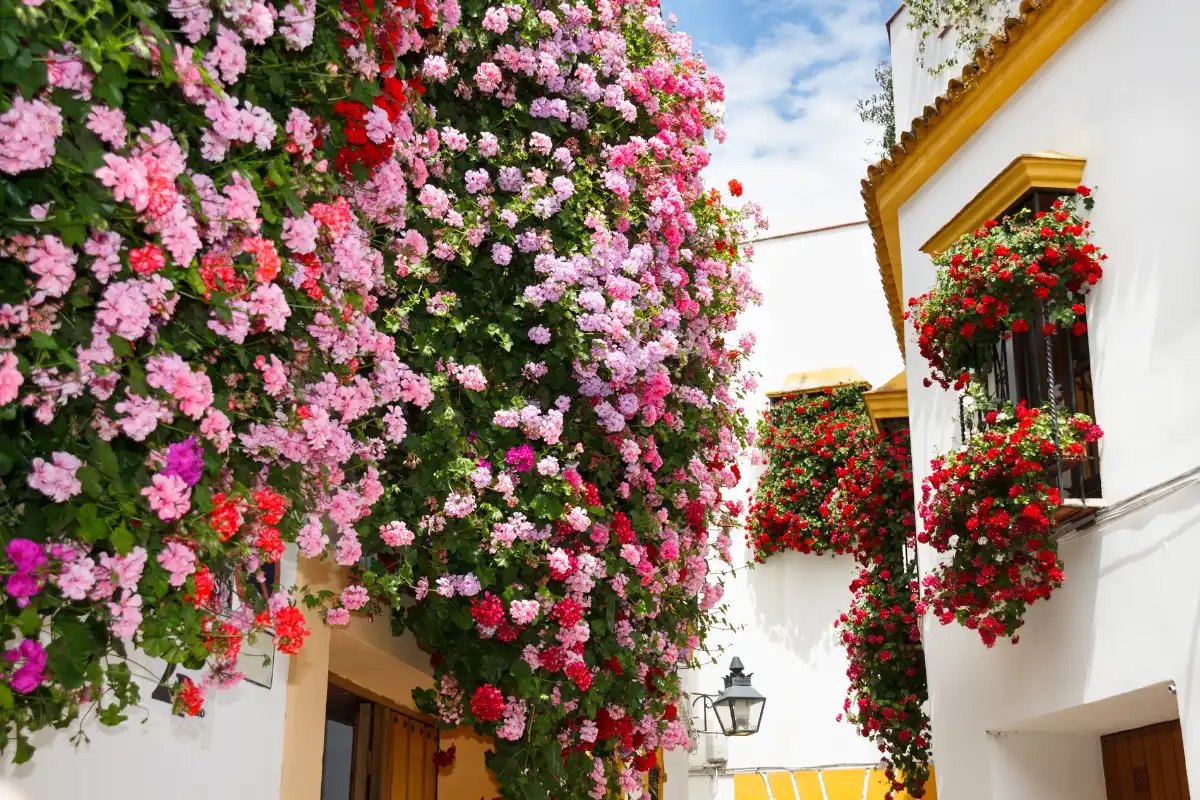
Cordoba's patios are central courtyards filled with flowers, fountains, and ceramic pots, a tradition dating back to Roman times and perfected under Moorish rule. The patio provided a cool retreat from summer heat and a private outdoor living space.
Many patios in the Alcázar Viejo and San Basilio neighbourhoods are open year-round. Some are free to enter (though small donations are appreciated), others charge a modest fee.
The Palacio de Viana contains 12 stunning patios of different styles and eras, essentially a museum of patio culture.
Palacio de Viana
A 15th-century palace with 12 beautiful courtyards representing different eras and styles. The best single destination for understanding Cordoba's patio culture.
10. Festival de los Patios (May)
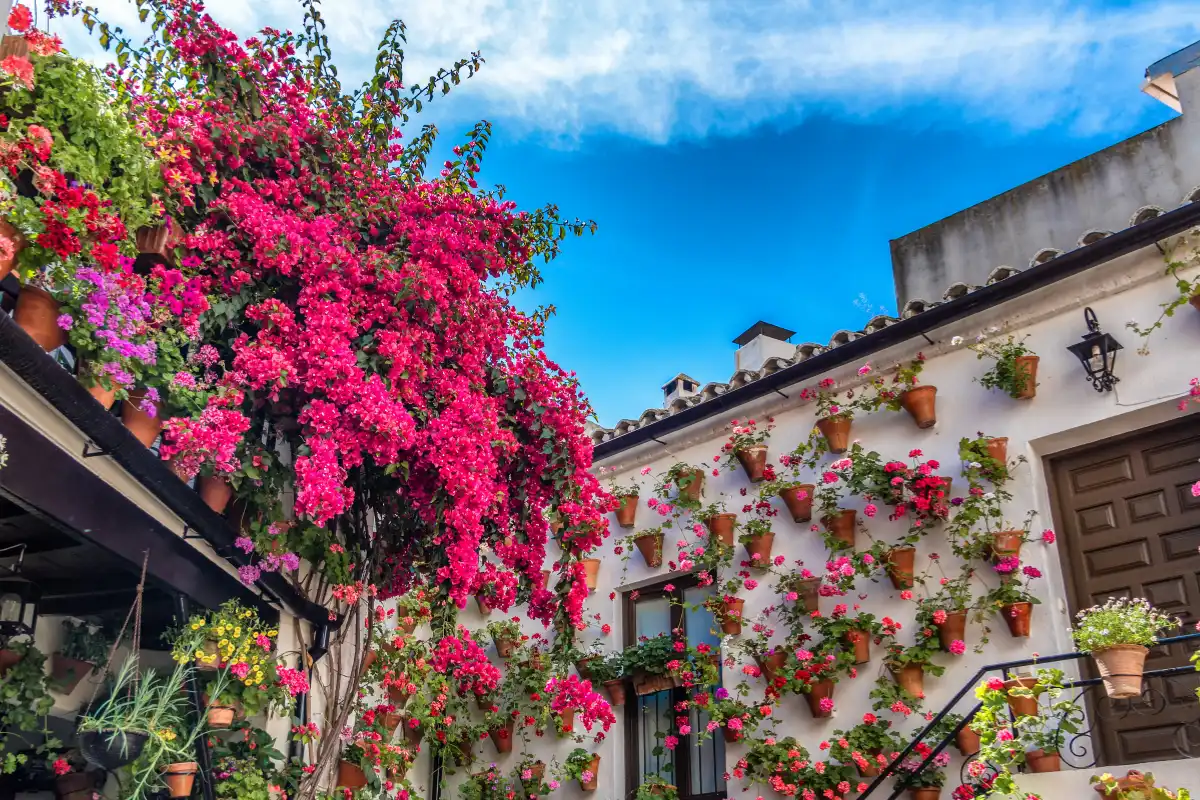
Every May, Cordoba explodes with flowers. The Festival de los Patios sees over 50 private courtyards open their doors to the public, competing for the best displays. It's been declared an Intangible Cultural Heritage of Humanity by UNESCO.
Residents spend all year preparing, filling every surface with geraniums, jasmine, and carnations. The pride is palpable.
The 2026 Patios Festival runs May 4-17. Patios are typically open 11am-2pm and 6pm-10pm. Entry is free, but Cordoba gets extremely busy during this period. Book accommodation months in advance.
Historical Sites
11. Medina Azahara
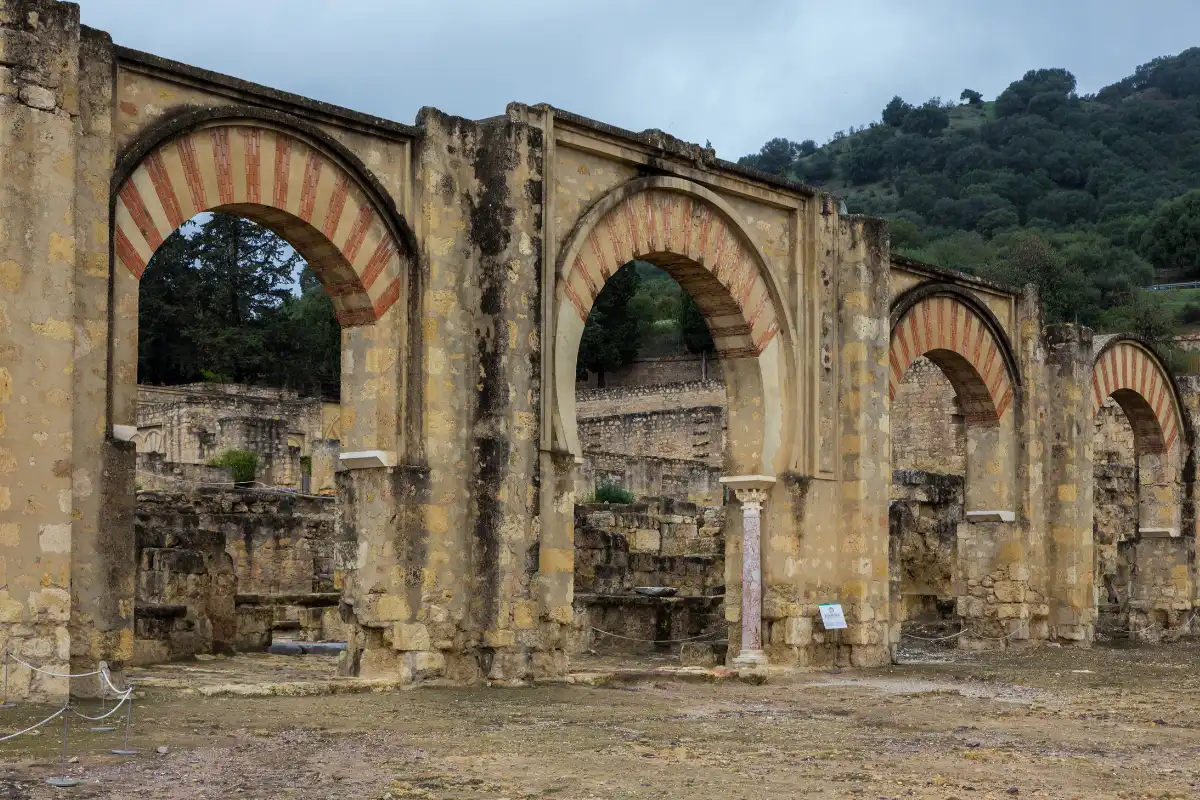
Ten kilometres outside Cordoba lie the ruins of Medina Azahara, the palace city built by Caliph Abd ar-Rahman III in the 10th century. At its height, it was the administrative centre of Al-Andalus and one of the most splendid cities in the world.
It lasted barely 80 years before being sacked and abandoned, then slowly buried and forgotten for nearly a thousand years. Excavations began in 1911 and continue today. Only about 10% has been uncovered.
What's been revealed is extraordinary: reception halls, gardens, baths, and intricate carvings that suggest the wealth and sophistication of the Caliphate at its peak.
Medina Azahara
The ruins of a 10th-century palace city that was once the most magnificent in Europe. A UNESCO World Heritage Site that reveals the splendour of Al-Andalus at its peak.
12. Roman Temple
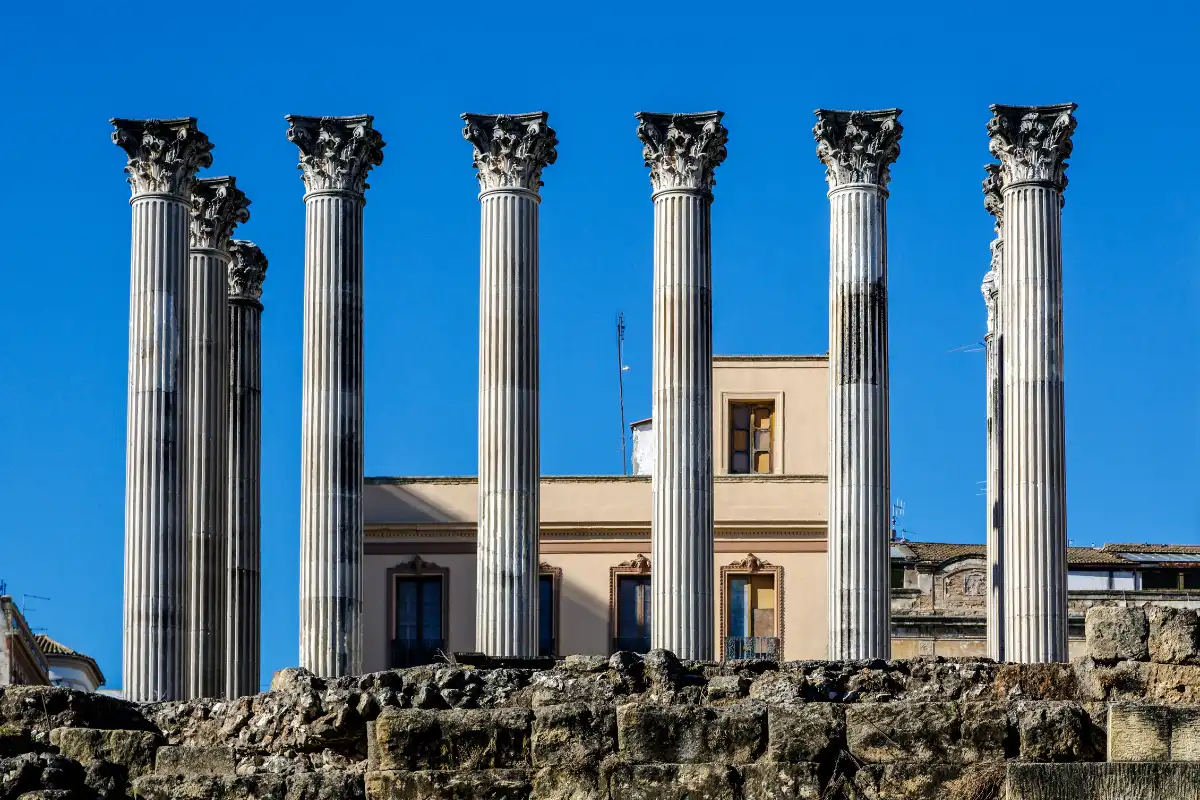
Near the Town Hall, the remains of a Roman Temple stand surrounded by modern Cordoba. Built in the 1st century AD during the reign of Emperor Claudius, it was only discovered during construction work in the 1950s.
Ten Corinthian columns have been re-erected, giving a sense of the original scale. It's free to view and makes a good photo stop.
13. Puerta de Almodóvar
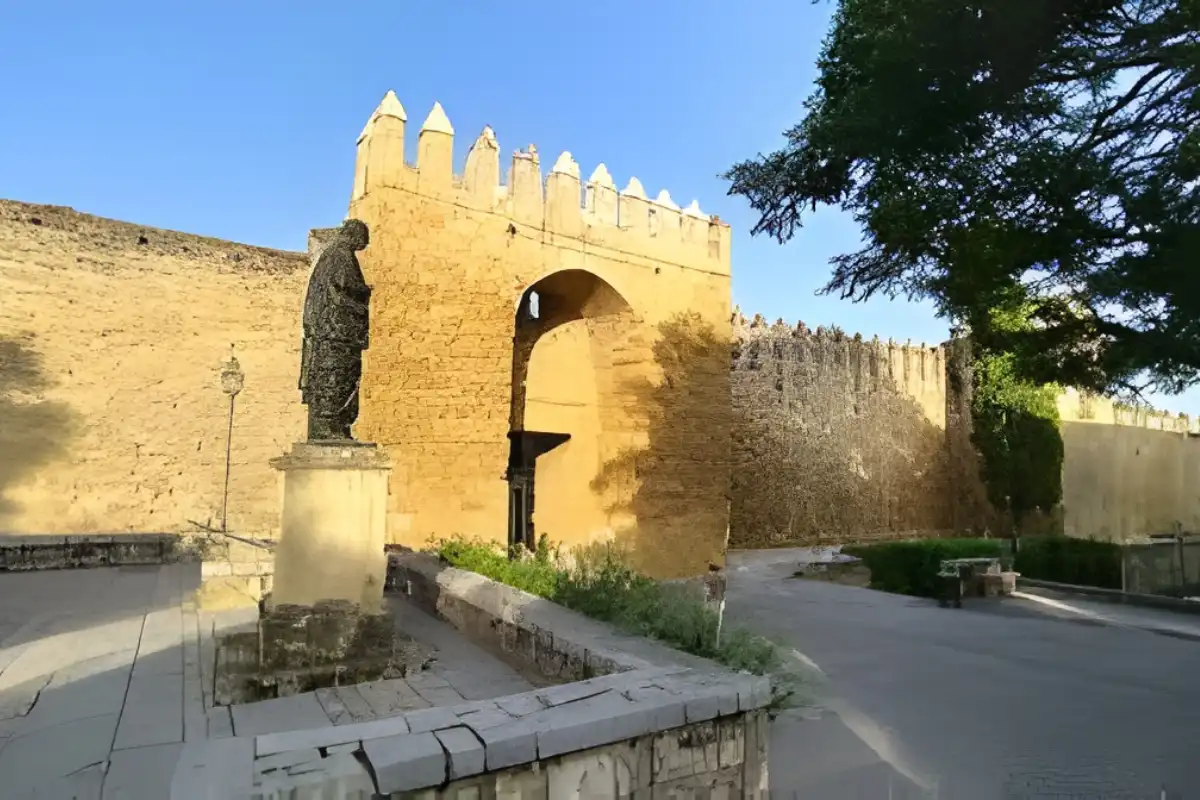
The Puerta de Almodóvar is the best-preserved of Cordoba's medieval gates, marking the western entrance to the old city and the beginning of the Jewish Quarter.
The statue outside commemorates the philosopher Seneca, born in Cordoba in 4 BC. It's a good starting point for exploring the Judería.
Food and Markets
14. Eat Salmorejo

Salmorejo is Cordoba's signature dish: a thick, cold tomato soup topped with jamón and hard-boiled egg. It's similar to gazpacho but richer and creamier.
Every restaurant in Cordoba serves it, but quality varies. Look for places where locals outnumber tourists, and where the salmorejo is made fresh daily, not poured from a carton.
You'll also want to try flamenquín, rolled pork loin stuffed with jamón, breaded and fried. Berenjenas con miel (fried aubergine drizzled with molasses) is another staple, along with rabo de toro, an oxtail stew slow-cooked for hours.
Local tip
Many traditional bars in Cordoba still serve free tapas with drinks. This tradition is dying out in touristy areas, but head to neighbourhoods like San Lorenzo or Santa Marina and you'll find it alive and well.
15. Mercado Victoria
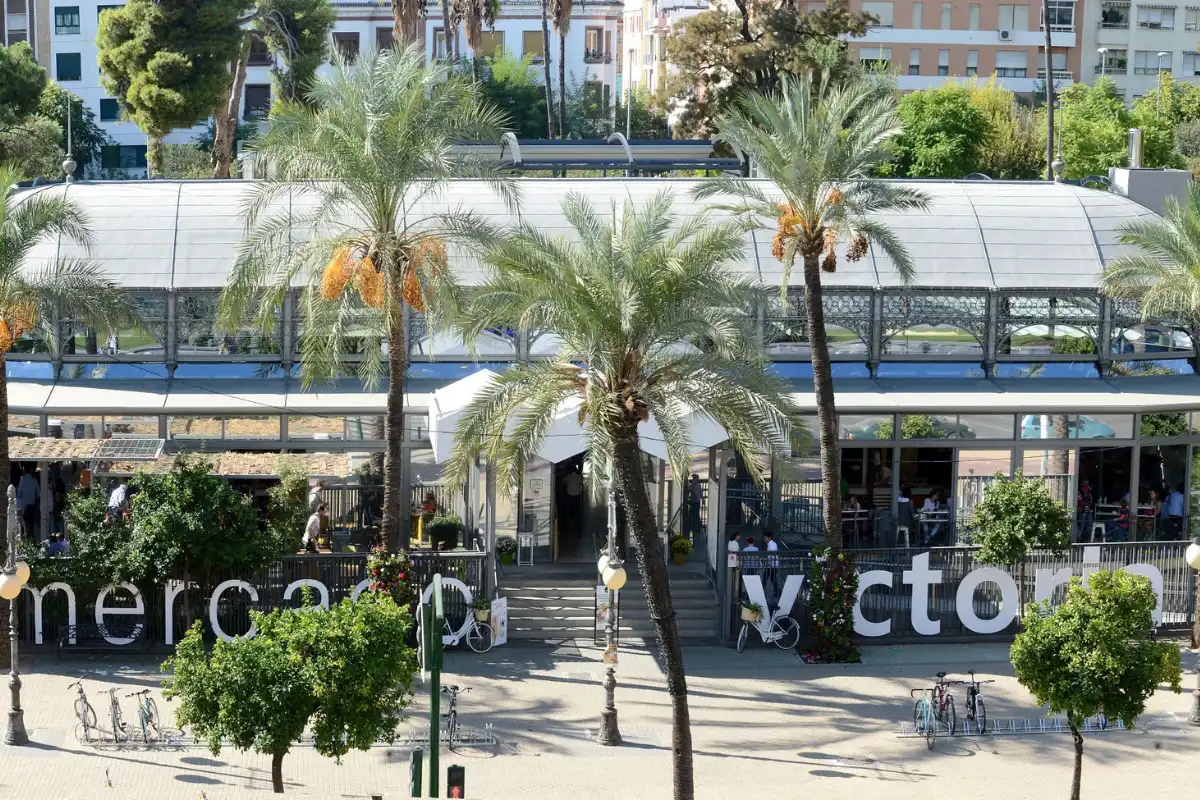
The Mercado Victoria is a food hall in a beautifully restored 19th-century pavilion. Unlike traditional markets, this one is designed for eating on-site: counters serve everything from sushi to local wines to artisan cheese.
It's a good spot for lunch if you want variety, or for evening drinks on the terrace. You'll find it in the Jardines de la Victoria, open daily from noon. Credit cards are accepted everywhere.
16. Tabernas and Bodegas
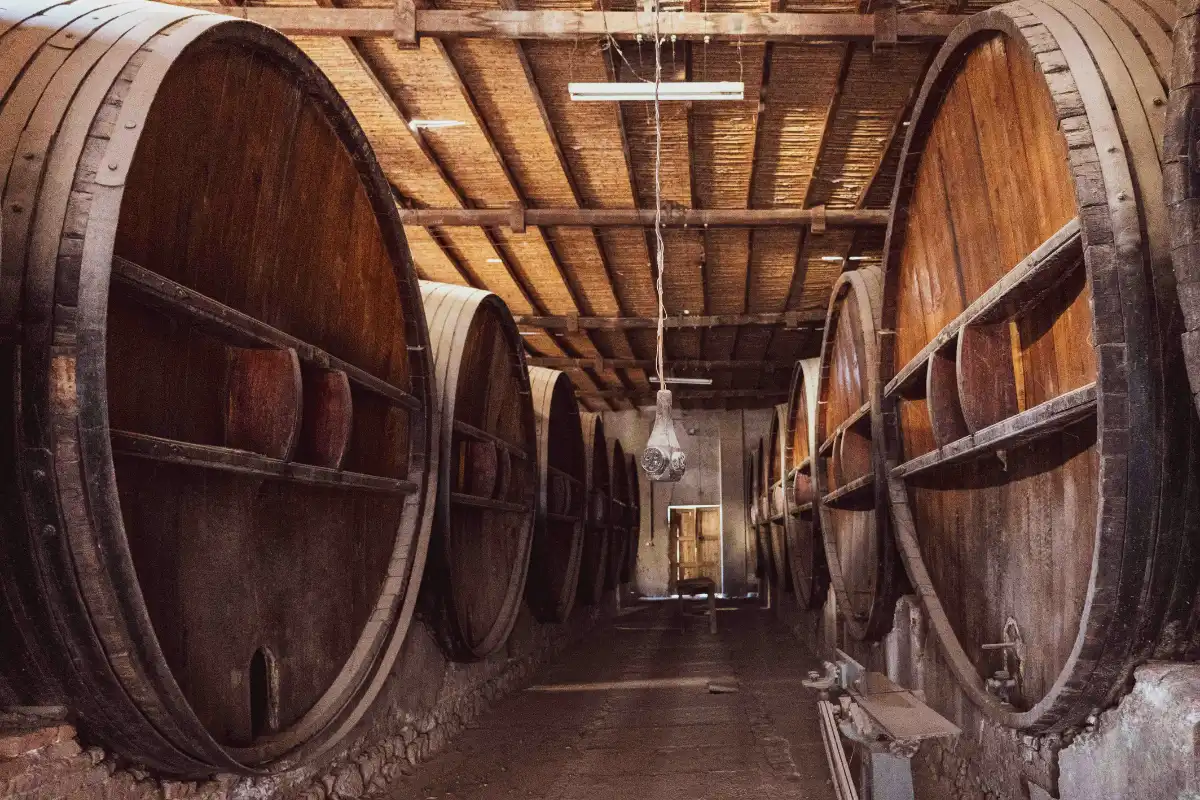
Cordoba's traditional drinking establishments are tabernas (taverns) and bodegas (wine bars). They're often simple places with barrels stacked along the walls and jamón hanging from the ceiling.
Taberna Salinas has been serving classic Cordoba food and drink since 1879. Casa Pepe de la Judería is atmospheric and right in the Jewish Quarter. Bodegas Campos is a historic bodega with excellent local wines.
Free Things to Do in Cordoba
17. Free Entry Opportunities
| Attraction | Free Entry |
|---|---|
| Mezquita-Cathedral | Mon-Sat 8:30-9:30am |
| Alcázar | Tuesdays (EU citizens) |
| Synagogue | Free for EU citizens |
| Medina Azahara | Free for EU citizens |
| Roman Bridge | Always free |
| Patios (select) | Year-round (donation appreciated) |
18. Free Walking Tours
Several companies offer tip-based walking tours of Cordoba's historic centre. They typically cover the Mezquita exterior, Jewish Quarter, and key landmarks in about 2 hours. Tours depart from Plaza de las Tendillas and are available in English, Spanish, and other languages. Tip what you think the tour was worth.
19. Wander the Neighbourhoods
Beyond the tourist centre, Cordoba has atmospheric neighbourhoods that see few visitors.
San Lorenzo is full of quiet plazas and traditional bars where free tapas culture is alive and well. Santa Marina has medieval churches and a genuine sense of local life. San Basilio is the best place to see patios outside festival season.
These areas give you a taste of everyday Cordoba, where the city's unhurried rhythm becomes apparent.
Day Trips from Cordoba
20. Day Trip Ideas
Cordoba's central location makes it an excellent base for exploring Andalusia.
| Destination | Travel Time | Highlights |
|---|---|---|
| Seville | 45 mins by train | Alcázar, Cathedral, tapas |
| Granada | 2 hrs by train | Alhambra, Albaicin |
| Málaga | 1 hr by train | Beaches, Picasso, food |
| Priego de Córdoba | 1.5 hrs by car | Baroque churches, olive oil |
| Zuheros | 1.25 hrs by car | White village, Cueva de los Murciélagos |
Practical Information
Getting to Cordoba
Cordoba is extremely well-connected by high-speed train. The AVE from Madrid takes 1 hour 45 minutes, from Seville it's 45 minutes, and from Málaga it's about an hour. From Granada, you're looking at 2 hours by train or bus.
The train station (Córdoba Central) is a 20-minute walk from the historic centre, or a short taxi ride.
Getting Around
The entire historic centre is walkable. Distances between major attractions are short, and much of the old city is pedestrianised.
In summer, take it slowly. Temperatures regularly exceed 40°C in July and August. Carry water, wear sunscreen, and follow the local custom of resting during the hottest hours.
Best Time to Visit
Spring from March to May brings ideal weather and the patio festival, but it's also the busiest season. If you can time your visit for early May, the Festival de los Patios is unforgettable.
Autumn from September to November offers warm days, fewer crowds, and harvest season. It's our favourite time to visit.
Summer is extremely hot, with temperatures regularly above 40°C. Many locals leave the city. If you do visit between June and August, plan outdoor activities for early morning or after 7pm and embrace the evening culture.
Winter is mild and quiet. You'll have most attractions to yourself, and Christmas markets add some festive atmosphere from December onwards.
What Events Should You Plan Around?
Cordoba packs its biggest events into spring. Carnival livens up February with parades and parties. Semana Santa in March or April brings solemn Easter processions through the old city.
May is the standout month. It kicks off with Cruces de Mayo (May 1-3), when decorated crosses appear throughout the city. Then comes the Festival de los Patios (May 4-17), the UNESCO-listed courtyard festival that draws visitors from all over Spain. The month wraps up with the Feria de Córdoba, the city's biggest celebration.
In July, the Festival de la Guitarra brings guitar music to venues across the city.
Final Thoughts
Cordoba is all about enjoying history in a more peaceful, undisturbed setting than Granada or Seville. The Mezquita is genuinely one of the most impressive buildings we've visited anywhere. The patios, the food, and the quiet backstreets of the Judería make it a city that rewards slow exploration.
If you're planning a trip around Andalusia, don't skip this one. A day trip from Málaga or Seville works, but two days lets you experience Cordoba properly.

Hola! I'm the researcher, walker, and co-founder behind Spain on Foot. I help travellers experience Spain authentically, through in-depth guides, locals-only knowledge, and cultural stories you won't find in guidebooks. You can reach me at heidi@spainonfoot.com