tips
Driving in Spain: Complete Guide for Tourists
This post may contain affiliate links, which means I earn a small commission, at no extra cost to you. It helps keep the blog alive, and we really appreciate your support!

Spain's roads are excellent, but the rules are strict. Here's everything you need to know before getting behind the wheel.
Spain has some of the best roads in Europe, but also some of the strictest enforcement.
Speed cameras are everywhere, fines are steep, and the rules are different enough from other countries to catch tourists off guard.
We've lived in Spain for years and rent cars regularly to explore.
We're used to driving on the left (South African expats), so switching sides took some adjustment.
No fines yet (touch wood), but we've had a few close calls. The real wake-up call was looking at the Spanish learner's exam. That's when you realise just how much you've been assuming.
This guide covers everything you need to know to drive legally and confidently in Spain. If you do pick up a fine along the way, we've got a separate driving fines in Spain guide too.
| Quick fact | Detail |
|---|---|
| Drive on | Right side of the road |
| Motorway speed limit | 120 km/h |
| Minimum driving age | 18 (21+ for most rentals) |
| Alcohol limit | 0.5 g/l blood (0.25 mg/l breath) |
| IDP required | Non-EU drivers (US, Canada, Australia, etc.) |
| Emergency number | 112 |
Compare hotel prices in Spain
Find the best deal across booking sites
Licence Requirements by Country
| Your Licence | Valid in Spain? | IDP Required? | Notes |
|---|---|---|---|
| EU/EEA countries | Yes | No | Valid as long as not expired |
| UK (post-Brexit) | Yes | No (short stays) | Valid for visits up to 6 months |
| USA | Yes | Yes (recommended) | IDP strongly recommended |
| Canada | Yes | Yes (recommended) | IDP strongly recommended |
| Australia | Yes | Yes | IDP required |
| South Africa | Yes | Yes | IDP required |
An IDP (International Driving Permit) is a translation of your licence, not a separate licence. Get one before you travel from your home country's automobile association (AA, AAA, etc.). It's valid for 1 year.
The minimum driving age in Spain is 18, but most rental companies require you to be 21 or older. Drivers under 25 often pay a young driver surcharge.
If you're staying longer than 6 months, you'll need to convert your licence to a Spanish one, which involves written and practical exams.
Some rental companies don't ask for an IDP, but if you're stopped by police without one (as a non-EU driver), you could face problems. Get one before you travel. It's cheap and takes minutes.
Can I Use My UK Driving Licence in Spain?
Yes. Since the UK-Spain reciprocal agreement of 2023, UK photocard licences are fully recognised for short-term visits of up to 6 months. You don't need an International Driving Permit.
If you're planning to move to Spain rather than visit, the rules change. UK licence holders who become Spanish residents must exchange their licence within 6 months of obtaining residency. The reciprocal agreement means no Spanish driving test is required, but you do need to pass a psycho-physical medical at an authorised centre.
For the latest rules, check the DGT (Direccion General de Trafico) website directly.
Speed Limits in Spain
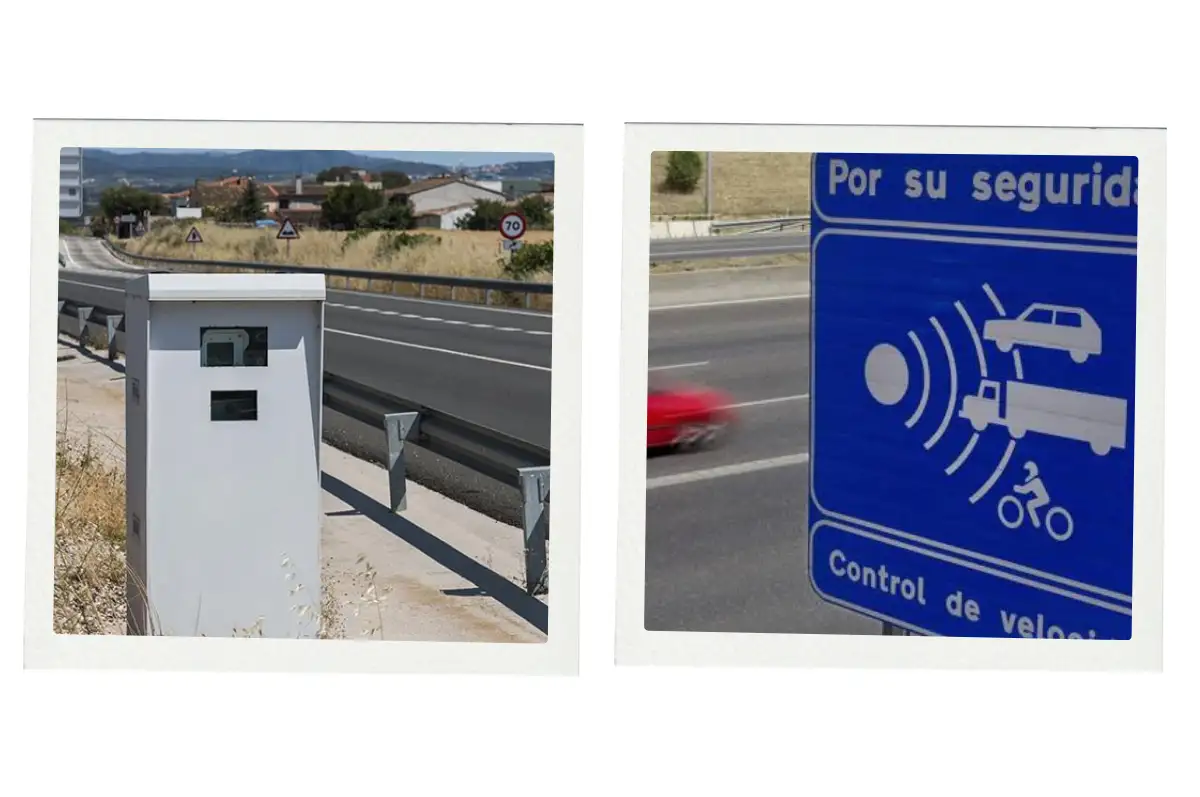
Speed limits are strictly enforced. Cameras are everywhere, often disguised as electrical boxes.
| Road Type | Speed Limit |
|---|---|
| Motorways (autopistas/autovias) | 120 km/h |
| Dual carriageways | 100 km/h |
| Conventional roads (outside towns) | 90 km/h |
| Urban roads (multi-lane) | 50 km/h |
| Urban roads (single lane) | 30 km/h |
| Residential/school zones | 20 km/h |
On roads up to 90 km/h, cameras trigger at 7 km/h over the limit. On faster roads (100+ km/h), the tolerance is 7%.
Speeding fines start at €100 for minor offences and go up to €600 for serious speeding, plus points deducted from Spanish licences. Extreme speeding (60+ km/h over in urban areas) can result in criminal charges.
Google Maps and Waze warn you about speed cameras. Use them. Many cameras are well hidden, and the fines add up quickly.
Road Rules You Must Know
The Basics
- Drive on the right, overtake on the left
- Seatbelts mandatory for all passengers, front and rear
- Headlights in tunnels, even in daylight
- No handheld phones, fines start at €200 (use hands-free only)
- Children under 1.35m must use child seats in the rear
Rules That Catch Tourists Off Guard
| Rule | Fine |
|---|---|
| Driving in flip-flops or barefoot | Up to €200 |
| Eating while driving | Up to €200 |
| Driving shirtless | Up to €200 |
| Not carrying spare glasses (if you wear them) | Up to €200 |
| Arm out the window | Up to €100 |
Yes, these are real. Spanish traffic law is detailed. For a full list of things that surprise visitors, see our guide to tourist scams and mistakes in Spain.
Low Emission Zones (ZBE)
All Spanish cities over 50,000 residents now have mandatory Low Emission Zones. Foreign vehicles must comply.
Check whether you need to register before entering Madrid, Barcelona, Valencia, or Seville. If you're renting in Malaga, most rental cars are new enough to be compliant, but it's worth confirming. We've written a detailed guide to Malaga's Low Emission Zone if you're driving there.
Emergency Corridor Rule
When traffic stops on multi-lane roads, drivers must create a central emergency corridor. Left lane moves left, all others move right, leaving the middle clear for emergency vehicles. This has been enforced since 2025.
Motorcycles in Standstill Traffic
Motorcyclists can use the right-hand hard shoulder during standstill traffic, but only up to 30 km/h and must yield to emergency vehicles.
Required Equipment in Your Car
Spanish law requires certain items in every vehicle. Rental cars should have these, but you're legally responsible for checking.
- Reflective vest (must be inside the car, not in the boot)
- Warning triangle (still valid for tourists in rental cars)
- V-16 beacon light (mandatory since January 2026 for Spain-registered vehicles)
- Spare glasses (if you wear prescription lenses)
- Valid driving licence and ID/passport
Since January 1, 2026, Spain-registered vehicles must carry a V-16 connected beacon instead of warning triangles. Tourists in rental cars should still have the traditional equipment provided by the rental company.
Before driving off in a rental, check that the reflective vest is inside the car, not in the boot. If you need to exit the vehicle on a roadside, you must put it on before opening the door. This catches a lot of visitors off guard.
Alcohol and Drug Limits
Spain has strict drink-driving laws with limits lower than many countries.
| Driver Type | Blood Limit | Breath Limit |
|---|---|---|
| Standard drivers | 0.5 g/l | 0.25 mg/l |
| New drivers (under 2 years) | 0.3 g/l | 0.15 mg/l |
| Professional drivers | 0.3 g/l | 0.15 mg/l |
One glass of wine can put you close to or over the limit. If you're driving, don't drink at all.
Penalties range from €500 to €1,000, with points deducted and criminal charges for high levels. Refusing a breathalyser is an automatic 6-point deduction and serious consequences.
Renting a Car in Spain
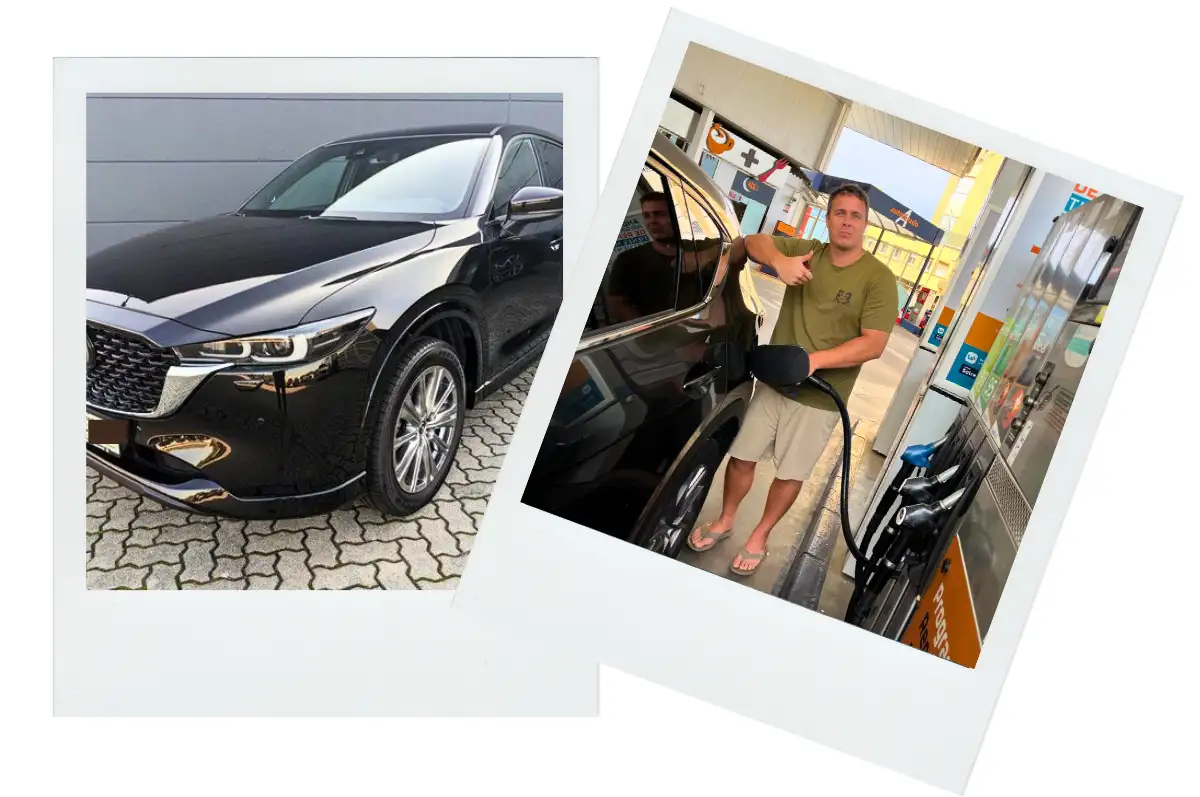
We rent regularly, and it pains us to see couples stranded at the pick-up counter because they're missing documents.
What You Need
| Requirement | Details |
|---|---|
| Driving licence | Valid, held for 1-2 years minimum |
| IDP | Required for non-EU drivers |
| Credit card | In driver's name, for deposit |
| Passport/ID | Original, not photocopy |
| Age | Usually 21+, surcharge for under-25s |
Manual vs Automatic
Manual cars dominate the Spanish rental market.
Automatics are available but rarer and more expensive. Book in advance, especially during peak season.
Rental Car Insurance
Basic rental includes CDW (Collision Damage Waiver), but with high excess (often €1,000+). Your options are:
- Upgrade through the rental company, which is more expensive but seamless
- Third-party excess insurance, which is cheaper but you pay upfront and claim back
- Credit card coverage, though you should check if your card actually offers rental protection
Get full coverage. Narrow alleys and tight parking make scratches almost inevitable. I once scraped a mirror in Granada. Full coverage saved me €600. And don't forget to sort out travel insurance for Spain too.
If you're renting specifically in Malaga, our renting a car in Malaga guide covers local companies and airport pick-up tips.
Parking in Spain
Parking is where most people get caught out.
Pavement Markings
| Line Colour | Meaning |
|---|---|
| White | Free parking (rare in cities) |
| Blue | Pay-and-display (check meters or apps) |
| Yellow | No parking at any time |
| Green | Resident parking (may be free at certain hours) |
| Red/Orange | Residents only |
Parking Tips
Double-parking is common but still illegal. You will get ticketed.
Spanish tow trucks are efficient and expensive. Park legally.
Underground garages in cities typically cost €20-30+ per night.
EasyPark and similar apps work in most Spanish cities. For more app recommendations, see our guide to travel apps for Spain.
Look for residential areas with white lines just outside city centres. A short walk can save you a fortune in parking fees. We've written specific parking guides for Malaga, Nerja, Ronda, and Estepona if you're heading to those cities.
Road Types and Tolls in Spain
Road Classifications
| Road Type | Description | Tolls? |
|---|---|---|
| AP | Autopistas de Peaje (toll motorways) | Yes |
| A / E | Autopistas (motorways) | Usually free |
| N | National roads | No |
| C | Regional roads | No |
Toll Payments
You can pay tolls by cash or card at toll booths. Frequent users can get a VIA-T electronic device, and registered users can use Telepeaje lanes.
The AP-68 to San Sebastian can cost €12+ one way. Google Maps can route around tolls if you prefer. It's slower but more scenic.
Is It Easy to Drive in Spain?
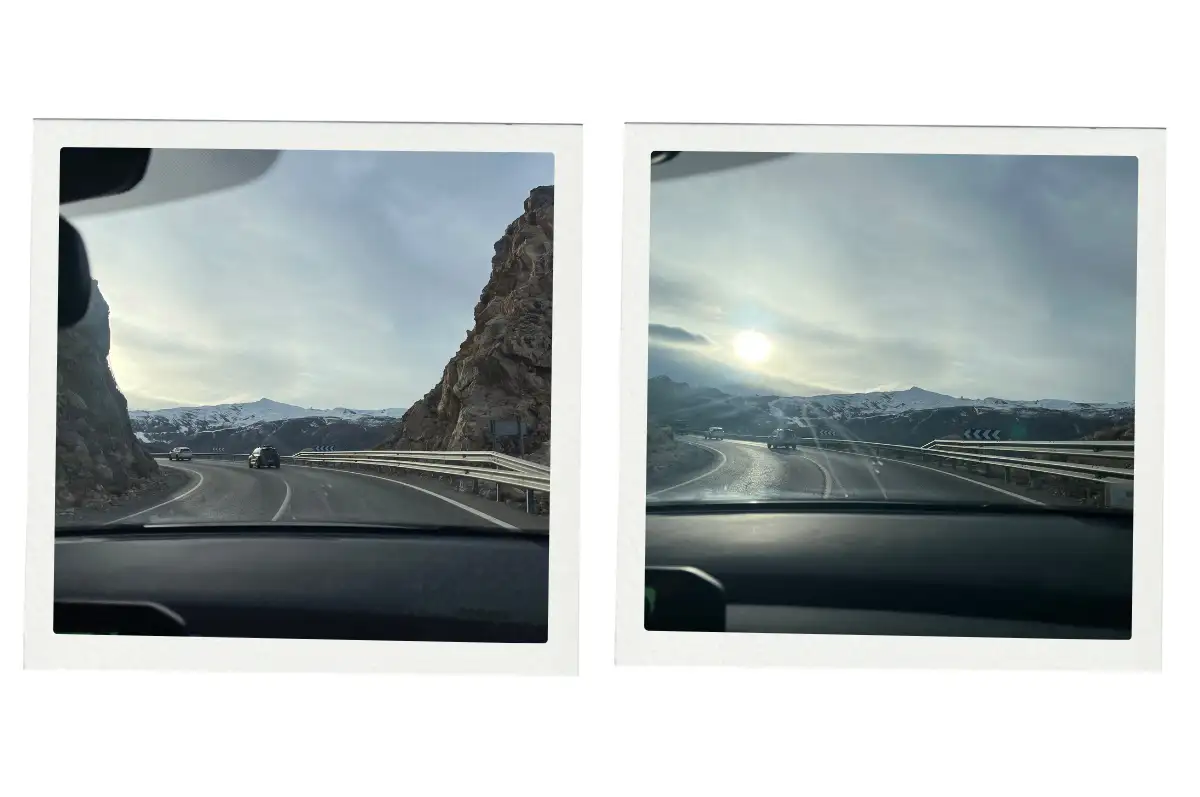
Outside cities, yes. Spanish motorways are excellent, well-maintained, and often quiet. Most of our road trips feel easy. Quiet highways, coastal roads, winding through hills. The roads are smooth, traffic is light. It's the kind of driving that feels like part of the holiday.
Things change when you head into a city. The streets are narrow, parking is creative, roads weren't built for modern traffic, and pedestrians step out like they're indestructible.
If you're entering a city, mentally prepare. Give your passenger the navigator job. If you're alone, go slow, stay calm. Take in the sights once you've found parking and your heart rate has returned to normal.
For getting around cities without driving, check our Malaga public transport guide or getting around Seville.
Getting Pulled Over
Two types of police handle traffic in Spain. Municipal Police cover urban areas. The Guardia Civil de Trafico patrol highways and rural roads.
If you're pulled over, stop immediately. Put on your reflective vest before exiting (if required). Present your licence, ID, and vehicle documents. Stay calm and respectful.
Random checks are normal, especially near borders or during festivals. They're often checking for drugs, alcohol, or stolen vehicles.
Police can demand on-the-spot payment of fines from tourists. They may escort you to an ATM. If you can't pay, your vehicle may be immobilised. Make sure you have your bank cards sorted before you travel.
If You Get a Fine
If you receive a fine during your trip or afterwards via the rental company:
- Pay within 20 days for a 50% discount
- Check online at the DGT website or the miDGT app
- Rental companies charge admin fees (€20-50) on top of the fine
For full details on how fines work, how to appeal, and what happens if you don't pay, see our driving fines in Spain guide.
Do I Need an International Driving Permit for Spain?
It depends on where your licence was issued. EU and EEA drivers don't need one. UK drivers don't need one for short visits of up to 6 months.
If you hold a US, Canadian, Australian, South African, or most other non-EU licence, you should get an IDP before travelling. It's a translation of your licence, not a replacement. You can get one from your country's automobile association (AAA in the US, AA in the UK and South Africa). It costs around €15-20 and takes minutes.
Some rental companies don't check for an IDP at the counter. But if you're stopped by Spanish police without one, you could face a fine or have your rental agreement voided. It's not worth the risk.
Can I Drive in Spain With a US Licence?
Yes, but you should get an International Driving Permit before travelling. While some rental companies don't ask for one, Spanish police may require it if you're stopped. An IDP is easy to obtain from AAA and costs around $20.
You'll need both your US licence and the IDP when driving. The IDP alone is not valid. Keep both in the car at all times alongside your passport.
If you're planning a road trip through Andalusia, an IDP is especially important since Guardia Civil checks are common on rural and inter-city routes.

Hola! I'm the researcher, walker, and co-founder behind Spain on Foot. I help travellers experience Spain authentically, through in-depth guides, locals-only knowledge, and cultural stories you won't find in guidebooks. You can reach me at heidi@spainonfoot.com