tips
Do You Need a Visa to Visit Spain? Entry Requirements by Country
This post may contain affiliate links, which means I earn a small commission, at no extra cost to you. It helps keep the blog alive, and we really appreciate your support!

Spain's visa rules vary by nationality. Here's exactly what you need to enter legally, whether you're visiting for a week or planning to stay longer.
Spain's visa requirements depend entirely on your nationality.
If you're from the US, UK, Canada, Australia, or dozens of other countries, you can visit for up to 90 days without a visa. If you're from India, China, South Africa, or certain other nations, you'll need to apply for a Schengen visa before you travel.
This guide breaks down exactly what you need to enter Spain legally, whether you're coming for a short holiday or planning a longer stay.
Use this guide to understand the requirements, but always verify details with the Spanish Ministry of Foreign Affairs before travelling. Visa rules can change, and your specific situation may have nuances.
Quick answer: do you need a visa for Spain?
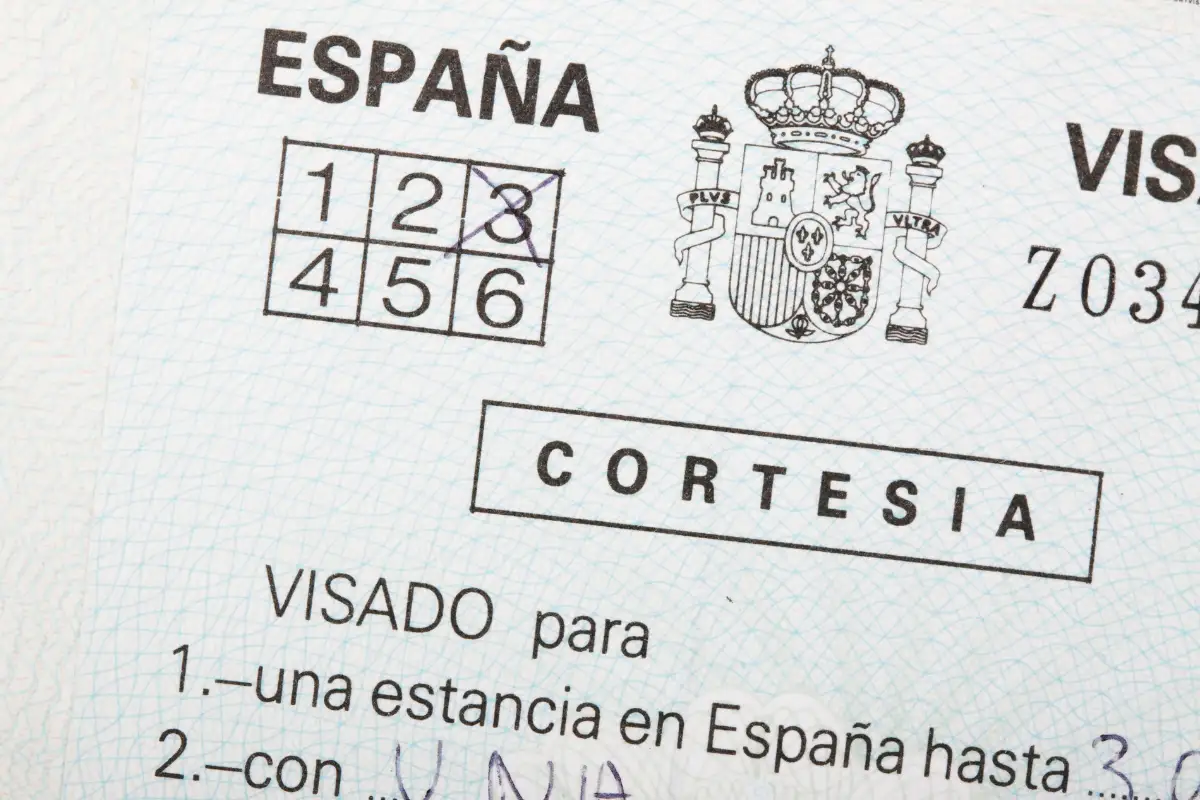
| Your Nationality | Visa Required? | Maximum Stay |
|---|---|---|
| EU/EEA/Switzerland | No | Unlimited |
| US, UK, Canada, Australia | No | 90 days in 180 days |
| Japan, South Korea, Singapore | No | 90 days in 180 days |
| Mexico, Brazil, Argentina | No | 90 days in 180 days |
| India, China, South Africa | Yes (Schengen visa) | Up to 90 days |
| Pakistan, Nigeria, Ghana | Yes (Schengen visa) | Up to 90 days |
Not sure about your country? Check your eligibility on the Schengen Visa Info site.
The 90/180-day Schengen rule explained
This is where many travellers get confused.
Spain is part of the Schengen Area, a zone of 27 European countries with no internal border controls. As a visa-free traveller, you can stay in the entire Schengen Area for a maximum of 90 days within any 180-day rolling period.
What this means in practice:
- Days in Spain, France, Italy, Germany, Portugal, and other Schengen countries all count toward your 90 days.
- The 180-day period is rolling, not calendar-based.
- Once you've used 90 days, you must leave the Schengen Area and wait until days expire from your calculation.
For example, if you spent 30 days in Spain in January, 30 days in France in March, and 30 days in Portugal in May, you've used all 90 days. You cannot re-enter any Schengen country until some of those days drop out of the 180-day window.
Calculate your allowed stay with the Schengen Calculator.
Overstaying your 90 days can result in fines, deportation, and a ban from Schengen countries for up to three years. Immigration officers stamp passports and track entries and exits carefully. With the new Entry/Exit System (EES) now rolling out, enforcement will be even more automated.
Can you stay in Spain longer than 90 days?
You cannot stay in Spain longer than 90 days on a tourist visa or visa-free entry. If you want to stay longer, you need a long-stay national visa (Type D) before you arrive.
The most common options for extending beyond 90 days are:
- Non-lucrative visa for retirees or people with passive income (minimum annual income around €28,000).
- Student visa for those enrolled in a Spanish educational institution.
- Work visa if you have a job offer from a Spanish employer.
- Digital nomad visa for remote workers employed by non-Spanish companies.
- Family reunification visa if you have close relatives who are Spanish residents.
You must apply for these at the Spanish consulate in your home country before travelling. You cannot switch from a tourist entry to a long-stay visa while in Spain.
If you're planning a longer trip across Andalusia, sort your visa situation well before departure.
Visa-free countries: full list
Citizens of these countries can enter Spain without a visa for short stays (up to 90 days in 180 days):
Americas: United States, Canada, Mexico, Argentina, Brazil, Chile, Colombia, Costa Rica, Panama, Uruguay, Venezuela, and others.
Europe (non-EU): United Kingdom, Ukraine, Moldova, Georgia.
Asia-Pacific: Australia, New Zealand, Japan, South Korea, Singapore, Malaysia, Taiwan, Hong Kong, Brunei.
Other: Israel, United Arab Emirates.
The complete list includes over 60 countries. Check the official list on the Spain Ministry of Foreign Affairs site.
Even if you don't need a visa, you may still be asked for documents at the border. Prepare proof of accommodation, return flights, travel insurance, and financial means before you travel.
Do US citizens need a visa for Spain?
No. US citizens can visit Spain without a visa for up to 90 days in any 180-day period for tourism, business, or family visits. You'll need a valid passport, and may be asked for proof of accommodation, return flights, and financial means at the border.
Once ETIAS launches (expected late 2026), US travellers will also need to complete a quick online registration and pay a €7 fee before departure.
Do UK citizens need a visa for Spain after Brexit?
No. UK citizens can still visit Spain visa-free for up to 90 days in any 180-day period. However, since Brexit, you now need a passport (ID cards are no longer accepted), and the 90-day Schengen limit applies. For longer stays, you'll need a visa.
UK travellers should also note that the European Health Insurance Card (EHIC) has been replaced by the UK Global Health Insurance Card (GHIC), but neither is sufficient to meet Spain's entry insurance requirements.
Countries that need a Schengen visa
If your country is not on the visa-free list, you'll need a Schengen short-stay visa to visit Spain, even for a few days.
Countries requiring a visa include India, China, South Africa, Pakistan, Nigeria, Ghana, Philippines, Indonesia, Egypt, Bangladesh, Vietnam, and many others.
How to apply for a Schengen visa
-
Determine the right embassy. Apply at the Spanish embassy or consulate in your country. If visiting multiple Schengen countries, apply to the country where you'll spend the most time.
-
Gather required documents:
- Completed application form
- Two recent passport photos
- Valid passport (3+ months validity beyond departure)
- Proof of accommodation
- Flight itinerary (round trip)
- Travel insurance (€30,000 minimum coverage)
- Bank statements (last 3 to 6 months)
- Employment letter or proof of funds
- Visa fee payment
-
Book an appointment. Many consulates use appointment systems. Book early, especially during peak seasons.
-
Attend your appointment. Bring all documents. You may need to provide biometrics (fingerprints).
-
Wait for processing. Standard processing is 15 working days, but can take longer during busy periods. Apply at least 4 to 6 weeks before travel.
Schengen visa costs (2026)
| Applicant Type | Fee |
|---|---|
| Adults | €90 |
| Children 6-12 | €45 |
| Children under 6 | Free |
Some nationalities have reduced fees under bilateral agreements. Fees increased from €80/€40 in June 2024.
Passport requirements for Spain

Spain follows Schengen passport rules, which are different from the "6-month rule" used in some countries.
Your passport must:
- Be valid for at least 3 months after your planned departure from the Schengen Area.
- Have been issued within the last 10 years on the date of entry.
- Have at least 2 blank pages for stamps.
For example, if your trip ends on July 15, your passport must be valid until at least October 15. If your passport was issued on January 1, 2015, it expired for Schengen entry purposes on January 1, 2025, regardless of its actual expiry date.
We recommend having at least 6 months of passport validity when travelling internationally. This gives you flexibility if plans change and avoids issues with airlines or connecting countries.
What documents might immigration ask for?
Even visa-free travellers can be asked to show documents at the border. Prepare the following:
- Valid passport (meeting the requirements above)
- Return or onward ticket out of the Schengen Area
- Proof of accommodation (hotel booking, Airbnb confirmation, letter from host)
- Travel insurance with €30,000 minimum medical coverage
- Proof of financial means (€122 per day, or €1,099 minimum for stays of 9+ days)
- ETIAS authorisation (once implemented, expected late 2026)
Proof of funds can be recent bank statements, credit card statements, pay slips, or cash. The 2026 requirement is €122 per person per day, with a minimum of €1,099 for stays of 9 days or longer.
If you're worried about staying safe in Spain, the entry process is straightforward and officers are generally quick and professional.
Is travel insurance required for Spain?
Yes, for almost everyone.
Schengen visa applicants
Travel insurance is mandatory for your visa application. Your policy must:
- Cover at least €30,000 in medical expenses
- Include emergency medical evacuation and repatriation
- Be valid in all Schengen countries
- Cover your entire stay
You'll need to provide a certificate at your visa appointment.
Visa-free travellers
Spain now requires visa-free travellers to have comprehensive private health insurance. Border officers can ask for proof, and failure to present it can result in fines up to €6,900.
The European Health Insurance Card (EHIC) or UK Global Health Insurance Card (GHIC) is not sufficient for entry requirements.
EU/EEA citizens
No insurance requirement for entry, though travel insurance is still recommended.
Trusted providers: AXA Schengen, WorldTrips, SafetyWing
ETIAS: what you need to know
ETIAS (European Travel Information and Authorisation System) is a new pre-travel authorisation that will be required for visa-free travellers to enter Spain and other Schengen countries.
| ETIAS Details | Information |
|---|---|
| Who needs it | Citizens of visa-free countries (US, UK, Canada, Australia, etc.) |
| Who doesn't need it | EU/EEA citizens, Schengen visa holders |
| Cost | €7 (free for under 18s and over 70s) |
| Validity | 3 years or until passport expires |
| Expected launch | Late 2026 (repeatedly delayed) |
| How to apply | Online, before travel |
ETIAS is not a visa. It's a quick online registration that screens travellers for security purposes. Most applications will be approved within minutes.
Until ETIAS launches, visa-free travellers don't need any pre-authorisation to enter Spain.
Official information: ETIAS Official Site
Entry/Exit System (EES)
The EU's Entry/Exit System (EES) began its phased rollout in October 2025, with full implementation across all Schengen borders by April 2026. Spain started operating EES at its borders in February 2026. This automated system:
- Registers your biometric details (fingerprints, facial image) at Schengen borders
- Tracks your entry and exit dates automatically
- Replaces passport stamps
You don't need to do anything before arrival. Registration happens at the border and is free.
First-time registration may take a few extra minutes, so allow slightly more time at passport control. After your initial registration, subsequent entries are faster.
This system makes it much harder to accidentally (or intentionally) overstay the 90/180-day limit.
Types of Spanish visas
Short-stay Schengen visa (Type C)
For tourism, business, or family visits up to 90 days. This is what most non-visa-exempt travellers need.
Long-stay national visa (Type D)
For stays longer than 90 days. Required for:
- Study in Spain
- Work in Spain
- Family reunification
- Retirement
- Non-lucrative residence
Apply at the Spanish embassy in your home country before travelling.
Spain digital nomad visa
Spain's digital nomad visa allows non-EU citizens to live in Spain while working remotely for companies outside Spain.
| Requirement | Details |
|---|---|
| Employment | Remote job with non-Spanish company |
| Work history | 3+ months with current employer |
| Qualifications | University degree or 3+ years professional experience |
| Income | Sufficient to support yourself (typically €2,500+/month) |
| Initial validity | 1 year, renewable |
| Path to residence | Yes, can lead to permanent residence |
Apply via the UGE-CE Portal.
You cannot work remotely in Spain on a tourist visa. If you plan to work while in Spain, even for a non-Spanish company, you need the digital nomad visa or another work permit. Read more about managing your finances in Spain if you're considering an extended stay.
Airport transit visa
Some nationalities need a visa even to transit through a Spanish airport without entering the country. Check if this applies to you before booking connecting flights through Madrid or Barcelona.
Common visa mistakes to avoid
These are the most common errors travellers make with Spanish visa requirements.
Do these before you travel:
- Apply early (4 to 6 weeks before travel).
- Check your passport validity against Schengen rules.
- Calculate your 90 days across all Schengen countries, not just Spain.
- Prepare all documents before your appointment.
- Get travel insurance that meets the €30,000 minimum requirement.
Avoid these mistakes:
- Booking non-refundable flights before visa approval.
- Assuming your 90 days reset when you leave and re-enter.
- Forgetting that previous trips count toward your 90 days.
- Confusing tourist visas with work permissions.
- Arriving without proof of accommodation or funds.
Official resources
| Resource | Link |
|---|---|
| Spain Ministry of Foreign Affairs | exteriores.gob.es |
| Schengen Visa Information | schengenvisainfo.com |
| ETIAS Official Site | travel-europe.europa.eu/etias |
| EU Entry/Exit System | home-affairs.ec.europa.eu |
| Digital Nomad Visa Portal | extranjeros.inclusion.gob.es |
| Schengen Calculator | schengenvisainfo.com/calculator |
| UK Entry Requirements for Spain | gov.uk |

Hola! I'm the researcher, walker, and co-founder behind Spain on Foot. I help travellers experience Spain authentically, through in-depth guides, locals-only knowledge, and cultural stories you won't find in guidebooks. You can reach me at heidi@spainonfoot.com