We lived in Málaga for a year and a half without owning a car, and we genuinely loved not having one.
The historic centre is compact and walkable, so you don’t need any transport at all once you’re in it.
Once you start heading further out, to the beaches at Pedregalejo, the western suburbs, or the towns strung along the coast, that’s when Málaga public transport starts earning its keep, saving you time and money.
This guide covers everything we used to get around during that year and a half: the buses, the metro, the Cercanías commuter trains, the airport, and taxis.
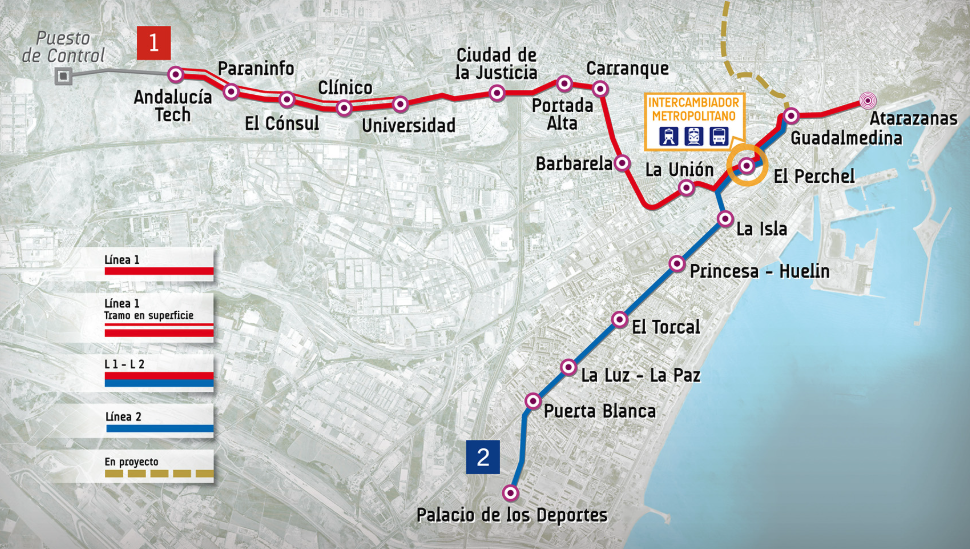
Further down, you’ll find a map of Málaga’s two metro lines, which meet at El Perchel and Guadalmedina. If you want to skip ahead, here’s what’s coming:
- Bus routes: the lines worth knowing, plus where to find the full network map
- Metro stops: every stop on both lines, mapped out
- Cercanías network: the commuter trains running out to Fuengirola and inland to Álora
⭐ Don’t miss >> Where to stay in Málaga, my neighbourhood guide
What’s the cheapest way to get around Málaga?
Walking, hands down. It’s free, and inside the centre it’s genuinely all you need.
Once you’re going further afield, the bus is your cheapest option, especially with a Bonobus card in your pocket. That brings a ride down to €0.50, instead of paying full fare every time.
Here’s how the main options compare:
- City bus: €1.40 for a single ticket, or €0.50 with a Bonobus card
- Metro: €1.35 for a single ticket, or €0.82 with the rechargeable card
- Commuter train (Cercanías): €1.80 to €3.60 for a single, depending on the zone
If you’re switching between the bus and the metro, it’s worth having the Transport Consortium card (Tarjeta Monedero del Consorcio) too. It gives you a discount on the transfer, as long as you make it within 50 minutes on a trip inside the city (the window is longer for journeys out of town).
So really, walking wins on price, and the Bonobus card is a very good close second.
How to pay: tickets and cards
Get on a Málaga bus without a card and you’ll pay full price on the spot, either handing the driver cash or tapping a contactless card. That’s your single ticket, and it works the same way on the metro and the trains, just from a machine at the station instead. It’s the simplest option, and also the most expensive way to travel per ride.
Which card do you actually need?
- Single ticketCash or contactless, no card needed, most expensive per ride
- Bonobus€1.90 card + €5 top-up for 10 bus rides, €0.50 each
- Tarjeta MonederoMetro only, €1.35 down to €0.82 a ride
- Transport Consortium cardBus, metro and interurban buses, best if mixing all three
- Cercanías ticketSeparate system, station machines or tap on the C1 airport line
For buses specifically, get yourself a Bonobus. It’s EMT’s rechargeable card, and you can buy one at almost any kiosk or estanco for €1.90. Top it up with €5.00 and you get 10 rides on it, you can share it between however many people you’re travelling with, and it comes with free transfers if you switch buses within an hour. Honestly, this is the one card most visitors should just buy on day one, easily the best €1.90 you’ll spend.
The metro has its own version, the Tarjeta Monedero, which brings your fare down from €1.35 to €0.82 a ride. One card covers up to 9 people, so a family or a group of friends only ever needs one between them. You’ll find the machines at any metro station, where you can choose paper (free) or a sturdier PVC card (€1.80).
Then there’s the Transport Consortium card, the Tarjeta Monedero del Consorcio, which is the most flexible of the lot. It works across city buses, the metro and the interurban buses running out along the coast, with discounted fares and cheaper transfers built in. Pick one up at tobacco shops, newsagents or Consorcio offices.
The Cercanías trains run their own ticketing system entirely, so none of the cards above work there. Buy single or return tickets at the machines in the station. The one exception is the C1 line out to the airport, where you just tap your contactless card or phone at the barriers, no ticket needed. Tap out at the other end too, or you’ll be charged the maximum fare.
Keep a Bonobus in your wallet and a contactless card in your pocket, and you’ve basically got the whole city sorted, nice and simple.
Getting from the airport
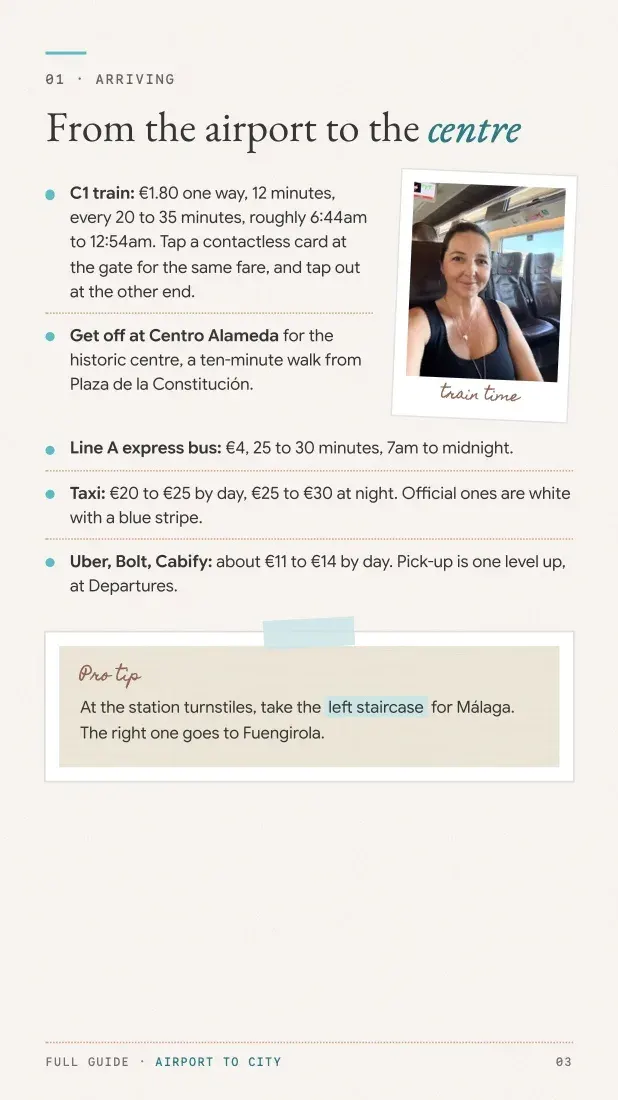
Touch down at Málaga-Costa del Sol and you’re only 8 km from the centre, which makes this one of the easiest, and honestly one of the best, airport runs I’ve done anywhere in Europe. You’ve basically got three ways in:
- The C1 commuter train: 12 minutes, €1.80. The fastest option by a long way.
- The airport express bus, Line A: a direct 25 to 30 minute ride for €4.
- A taxi or ride-share: around €20 to €25.
I’ve written a full guide to how to get from Malaga Airport to the city centre with the step by step for each one, which platform, where the bus actually stops, all of it. But honestly, whichever one you pick, you’ll be checked into your hotel before you’ve even worked out the time difference.
Where you end up basing yourself changes which of this you’ll actually use. A few picks that make the rest of this guide simpler:
Here are a few of my favourite places to stay near Málaga, picked for how easy they make getting around:
⭐ Old Town, no transport needed at all >> Palacio Solecio
⭐ Pedregalejo, right on the Line 11/3 bus routes >> Hotel La Chancla
⭐ Attached to María Zambrano station itself >> Barcelo Malaga
Getting around Málaga by bus
We’d only been in Málaga a few days, fresh off the plane from Costa Rica and still finding our feet, when my daughter told us which bus to catch to get where we were going that day. We found the stop, we found the bus, we got on, feeling very pleased with ourselves.
It took us in the opposite direction entirely.
We watched the city slide past in a direction that felt more and more unfamiliar, climbing up and up until we were somewhere above La Victoria, on top of a hill we hadn’t even known was there, with no idea where we were or how far we’d gone. Eventually the driver turned round and told us this was it, we needed to get off. So we did, standing on a street none of us recognised, and he made us pay for another ticket just to catch a bus back down.
It was only on that second bus that it clicked. We’d been standing on the wrong side of the street the whole time, waiting for a bus going in exactly the opposite direction to the one we wanted. We crossed over, waited two minutes, and were finally on our way.
That was our welcome to the EMT network, and it didn’t put us off for long. Once you know which side of the street you’re meant to be on, these buses are honestly one of the best things about getting around without a car. They’re reliable, they’re affordable, and once you go beyond the historic centre they cover the whole city so well you barely need to check a timetable.
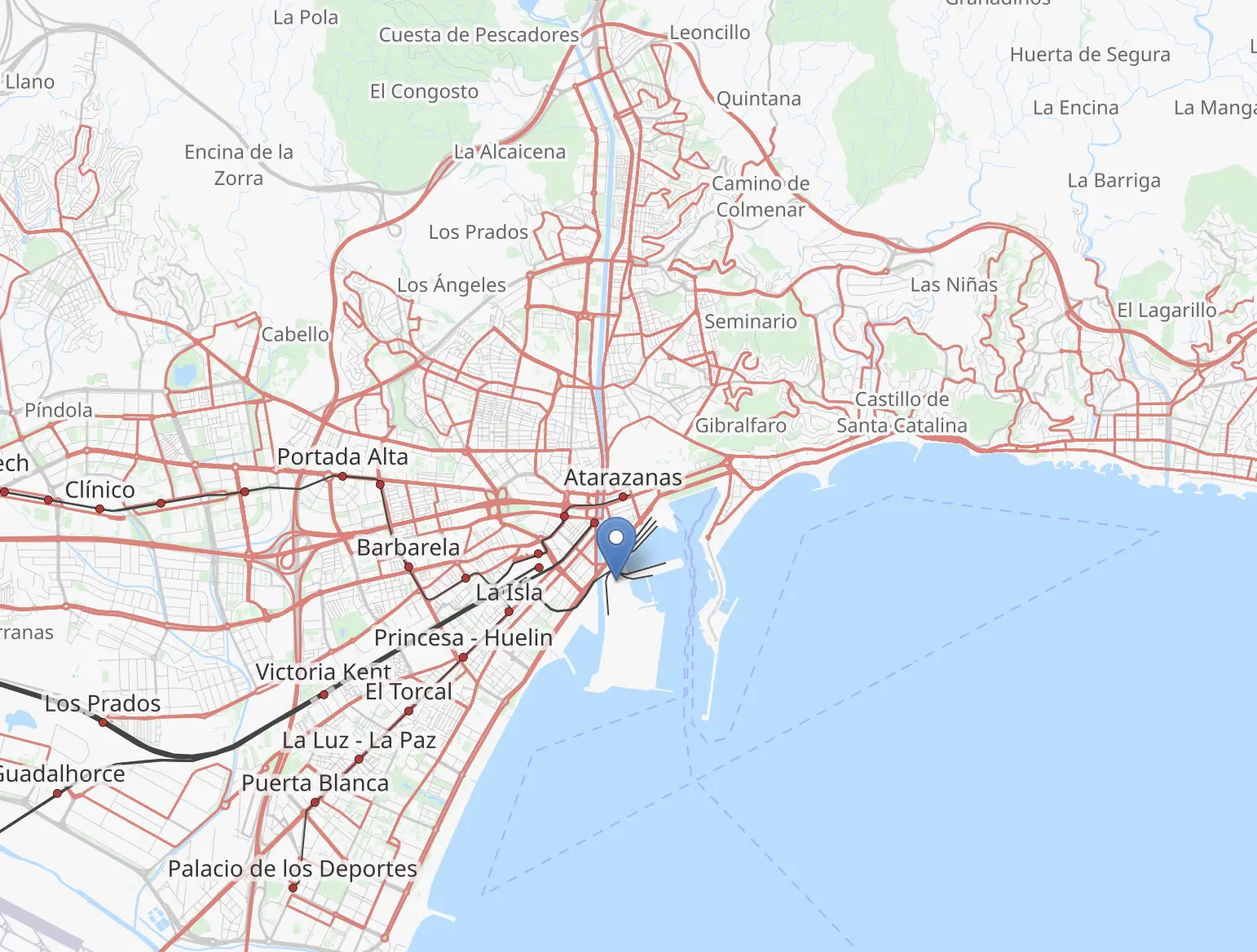
We used them for anything too far to walk comfortably. A hop down to the beach at Pedregalejo, a trip out to the botanical gardens, anywhere the metro just doesn’t reach, which in Málaga is most places.
Here’s what you’ll actually pay:
- Cash or contactless on board: €1.40 per ride
- Bonobus card: works out to about €0.50 per ride over 10 rides (the card itself costs €1.90, then €5.00 to top up for 10 rides, a price guaranteed until the end of 2026)
- Monthly pass: €23.95 for unlimited personal trips
- Airport Express, Line A: a flat €4.00
If you only sort one thing before you land, make it a Bonobus. It works out to about a third of the cash price per ride, it’s shareable between however many people you’re travelling with, and it includes free transfers within an hour of your first tap. One card covers a whole family, you just tap it once per person as they board and the driver sees the count come up on the screen. You can buy and top them up at kiosks, tobacco shops and EMT sales points all over the city, and if you don’t use it all, the card is refundable within a year as long as you hand it back in decent condition.
Getting on is simple enough once you know the drill. You board through the front door and tap your Bonobus, contactless card or phone on the reader right next to the driver. If you’re paying cash, hand it straight to the driver, they can give change, but they won’t accept notes bigger than €5.
Bus Routes for Visitors
You don’t need to learn the whole network, and honestly you shouldn’t try, the official EMT route map is a lot. Most visitors only ever need a handful of these:
- Line 11: city centre to Pedregalejo beach
- Line 3: Alameda to El Palo, out to the eastern beaches
- Line 35: city centre to the Gibralfaro castle area
- Line 20: to the last stop, then about a 15 minute walk to the botanical gardens
- Line A: the airport express
Lines 3 and 11 are the ones you’ll use most, because they run you straight out to the best beaches in Malaga east of the centre, which also happens to be where a lot of the best seafood in the city is. Line 35 gets you close to Gibralfaro castle, though be ready for a short walk uphill from the stop. Beyond that, don’t bother memorising numbers, just open the app.
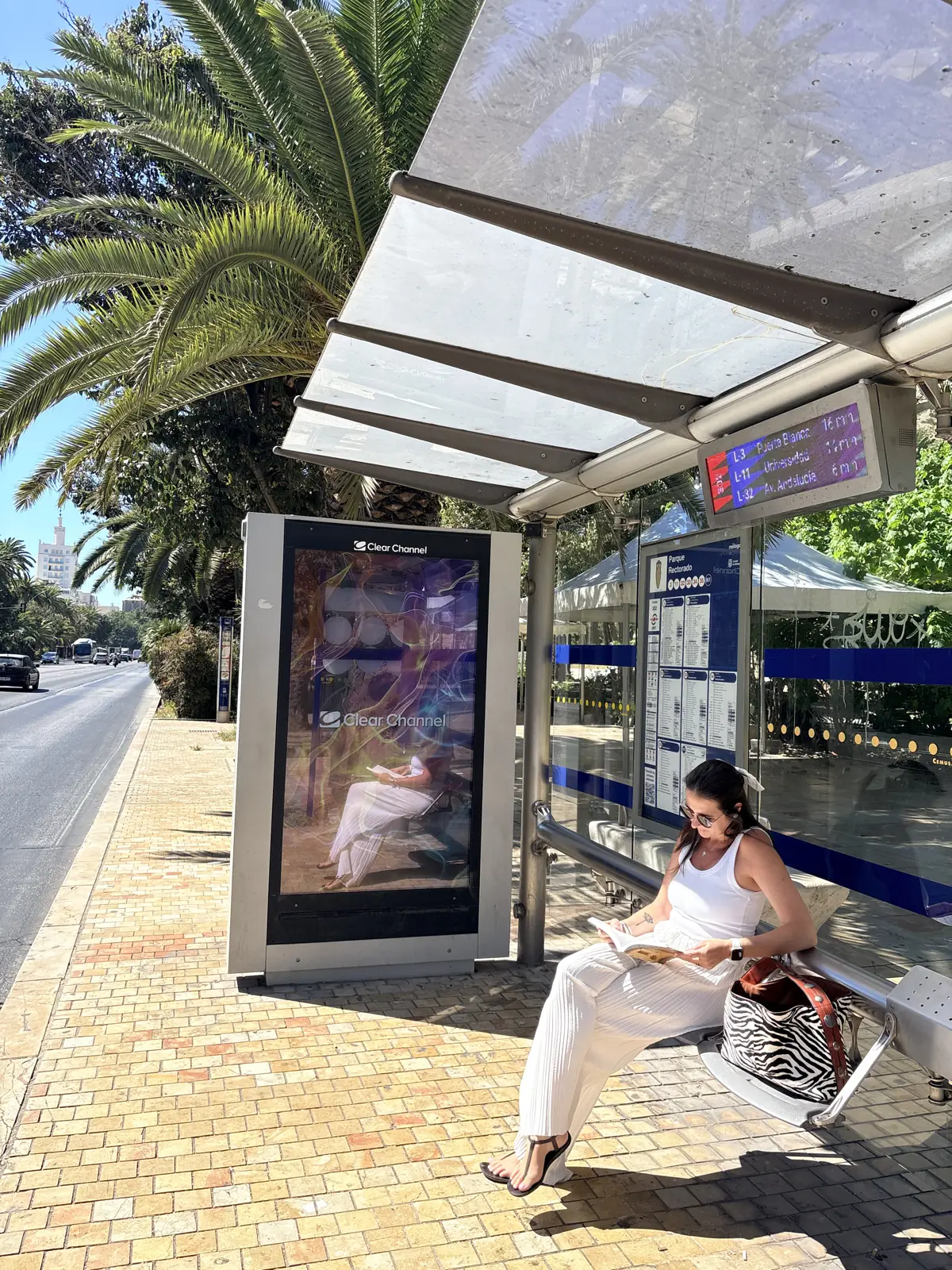
READY TO BOOK YOUR TRIP TO MÁLAGA?
🚗 Rent a car: I use Discover Cars
🎟️ Best guided tours: I use GetYourGuide
🏨 Accommodation: Find hotels in Málaga
🛡️ Travel insurance: I use SafetyWing
The EMT app
This is the thing that actually makes the whole system usable. The EMT Malaga app shows real time arrivals at every stop, lets you plan a journey from wherever you’re standing, and saves your favourite stops so you’re not hunting for them every morning. It’ll also show you the nearest stop, which is genuinely useful when you’re in a neighbourhood you don’t know yet and have no idea which direction to walk in.
It’s free for iOS and Android. Route information works offline, but you’ll need data for live arrival times.
Bus timetable
Most city buses run from around 6:30am until 11pm, and the busiest routes come every 10 to 15 minutes through the day, so you’re rarely waiting long. Once regular service stops, the Buhos night buses take over and keep running into the early hours, so a late dinner doesn’t have to mean hunting for a taxi. The official Malaga bus timetable has every route if you want to check before you head out.
The hop-on hop-off bus
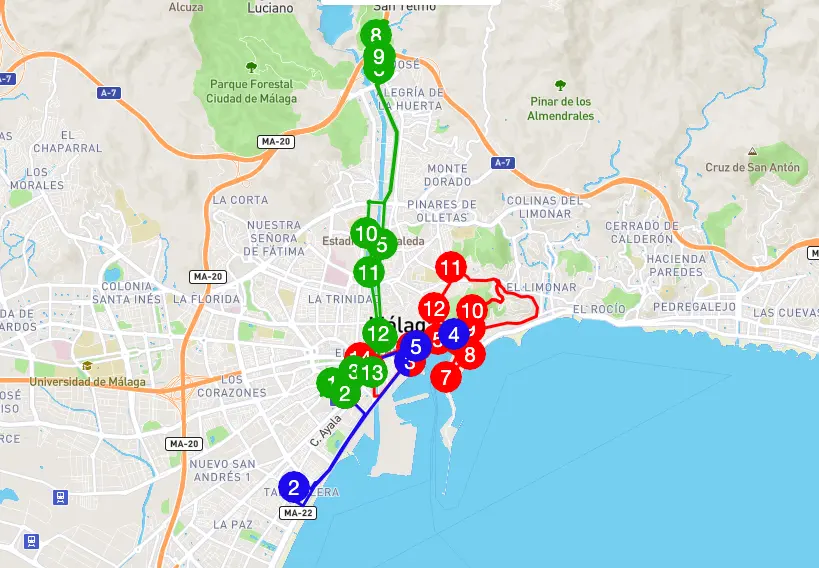
This one runs completely separate from the EMT network, its own tickets, its own buses, its own price tag. It’s around €32 for adults and €18 for kids, valid for 24 hours with unlimited rides and audio commentary, and there are three routes covering the main sights.
My honest take is that most people don’t need it. Málaga is compact and walkable, the main attractions sit close together, and the regular buses cost a fraction of the price. Unless you’ve got mobility issues or you specifically want the audio commentary, a Bonobus card and a comfortable pair of shoes will get you everywhere for a lot less money.
🎟️ If you want the highlights without driving yourself around them, a proper guided tour beats the hop-on-hop-off bus for the same kind of money. I use GetYourGuide to find them.
Getting around Málaga by metro
Every metro trip in Málaga ends up going through the same place. There are only two lines, but both of them funnel through El Perchel, right next to María Zambrano train station and the bus station on Paseo de los Tilos, by the Muelle de Heredia, and through Guadalmedina too.
It won’t get you everywhere, though. There’s no metro to Pedregalejo, none to the airport, and nothing that drops you directly into the Old Town. But for north-south trips, getting to the train station, or reaching the university area and the western districts, it’s the fastest thing going.
Here’s what it actually costs:
- Single ticket: €1.35
- Tarjeta Monedero (rechargeable card): €0.82 a trip, up to €20 loaded on it at once, and it works for up to 9 people
- Transport Consortium card: also €0.82 a trip, valid on buses and the metro both
- Transfer from bus to metro with the Consortium card: €0.66
- Durable PVC card: €1.80 one-time, reloadable after that
If you’re using the metro more than twice, get the rechargeable card. It cuts almost 40% off the cost per ride, and you can share it with whoever you’re travelling with. Tapping a contactless card or phone at the gates works too, but you’ll pay the full single-ticket price either way, no discount. Full fare details are on Metro Málaga’s official price page.
The Two Lines
Line 1 runs from Andalucía Tech in the north down to Atarazanas in the centre, and it’s the one you’ll use most if you’re near the university or coming in from the train station. In order:
- Andalucía Tech (the university’s tech campus)
- Universidad (the main university campus)
- Ciudad de la Justicia (courts and government buildings)
- Hospital Clínico (the main hospital)
- El Perchel (María Zambrano train station and the bus station)
- Guadalmedina (where you transfer to Line 2)
- Atarazanas (the historic centre, near Alameda Principal and the market)
If you’re arriving by train or long-distance bus, this is the fastest way into the centre. One stop to Guadalmedina, two to Atarazanas.
Line 2 goes the other way, from Palacio de Deportes in the west, through Huelin, to Guadalmedina in the centre:
- Palacio de los Deportes (the sports stadium and concert venue)
- Ciudad Deportiva (sports facilities)
- Puerta Blanca (residential)
- La Luz (residential, with local shops)
- La Unión (the western neighbourhoods)
- Carranque (the Huelin area, near the beaches)
- El Torcal (residential)
- El Perchel (train and bus station, transfer to Line 1)
- Guadalmedina (city centre connection)
Carranque is the stop you want for Huelin beach, about a 10 minute walk from the platform to the sand.
Metro Timetable
Monday to Thursday the trains run 06:30 to 23:00. Friday and the eve of a holiday, it stretches to 01:30. Saturday starts a little later, 07:00 to 01:30, and Sunday and holidays it’s back to 07:00 to 23:00.
During peak hours you’ll wait 5 to 7 minutes for the next train, off-peak and on weekends more like 10 to 15. Running until 1:30am on Friday and Saturday nights makes it a genuinely reliable, honestly pretty great, way to get home after dinner. Check the official metro timetable for any service updates.
How to use the metro
Buy or top up your card at the machines before the barriers, tap in at the gates, check the direction on the platform display, and get on. Hang onto the card, because you’ll need to tap out at the exit barriers too, or you won’t get through.
Every station has ticket machines with an English option, and they take cash, credit and debit cards. There’s no excuse to be caught without a ticket.
Is the metro accessible?
Yes, and it’s consistent across every station, not just the newer ones: lifts, ramps and level access throughout.
- Audio guidance at the ticket machines
- Wheelchair spaces in every carriage
- Tactile paving on the platforms
It’s one of the few parts of getting around Málaga that just works, no planning required, genuinely one of the best-designed systems I’ve used anywhere.
Malaga Commuter Trains (Cercanias)
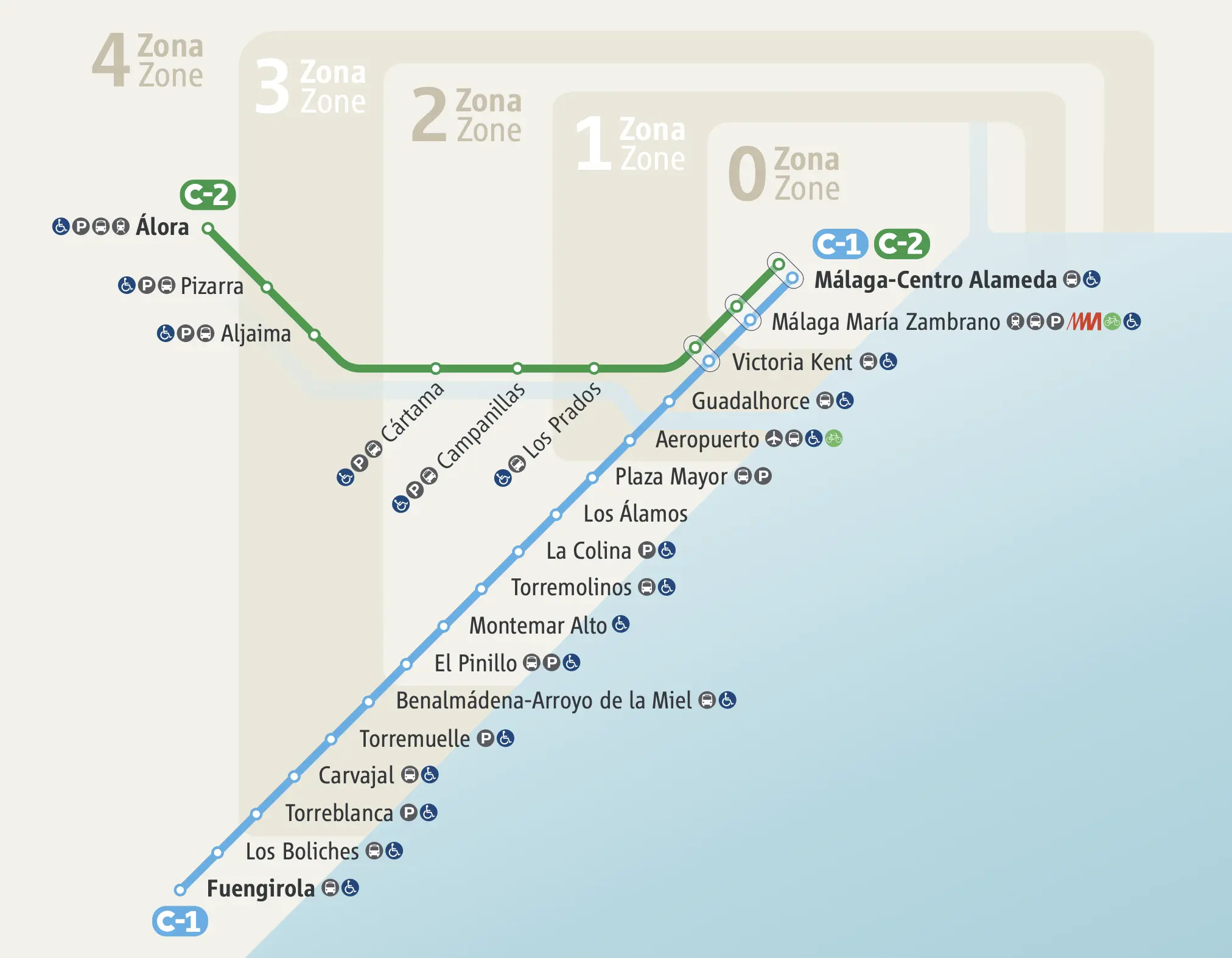
If you’re heading beyond the city, or trying to dodge airport taxi prices, this is the system you want. RENFE runs it, Spain’s national rail company.
For most visitors, two lines matter. The C1 runs along the coast from Málaga Centro to Fuengirola, stopping at the airport, Torremolinos, Benalmádena and a string of other coastal towns along the way. It’s the line for the airport, about 12 minutes and €1.80, and it’s also the one for day trips down the coast. From Fuengirola you can connect to Mijas Pueblo on the M-122 bus, or just take the M-112 straight from Málaga bus station (there’s a full Málaga to Mijas Pueblo guide with the details). The C2 heads inland towards Álora, handy if you’re visiting the Caminito del Rey, it’s a timed-entry walk, so I’d sort your ticket and transport through GetYourGuide before you go rather than turning up and hoping.
Train Prices
Here’s the breakdown by zone:
- Zones 1 to 2: €1.80 single, €3.60 return
- Zone 3: €2.05 single, €4.10 return
- Zone 4: €2.70 single, €5.40 return
- Zone 5: €3.60 single, €7.20 return
Return tickets only work same-day. Kids under six travel free, up to two per adult ticket, and children under 12 get 50% off. Groups of up to 10 get 30% off one-way tickets and 40% off return.
If you’ll be using the trains a lot, pick up a Bonotren, 10 trips for €11.95 in zones 1 to 2. It pays for itself fast.
How to Pay for the Train
Ticket machines at every Cercanías station take cash and cards, with an English option if your Spanish isn’t up to it. You need a physical ticket or a RENFE card to get through the barriers, no shortcuts there.
The exception is the C1 airport line: tap a contactless credit or debit card straight at the barriers, no ticket needed, and tap out again when you arrive or you’ll be charged the maximum fare. From your fifth trip on the same card, fares drop by 40%. Apple Pay and Google Pay work too, which is one less thing to sort out before a flight. Check the Renfe timetable for the latest times.
Bus or metro: the real cost difference
Load a Bonobus card and every ride costs €0.50, the cheapest way to move around the city by some distance. The metro’s rechargeable card runs to €0.82 a ride, still nothing to complain about, but it adds up if you’re doing it daily.
If you’re only making one or two trips, don’t overthink it, the gap is small:
- Bonobus card (bus): €0.50 per ride
- Rechargeable metro card: €0.82 per ride
- Single bus ticket: €1.40
- Single metro ticket: €1.35
For most visitors the bus works out cheaper overall, so that’s the one worth loading up if you’re staying more than a couple of days. But the metro wins for north-south journeys, it’s faster, and honestly the air conditioning alone is genuinely great once summer really kicks in. If you’re using both regularly, skip the separate cards and get the Transport Consortium card instead, it gives you the best discount when you transfer between the two.
Do you need a car in Málaga?
No, not in the city. It’s a genuinely good city to walk, and once you’ve done it for a few days you’ll wonder why you’d bother with anything else. Walking and public transport cover everything, the centre sits inside a low emission zone that makes driving in more hassle than it’s worth, and the old town streets are too narrow to enjoy it anyway. Parking is expensive too (there’s a full guide to where to park in Málaga, including the cheap and free spots, if you do bring one in).
For me, going car-free was the easy choice, easier than driving around Málaga hunting for parking ever would’ve been.
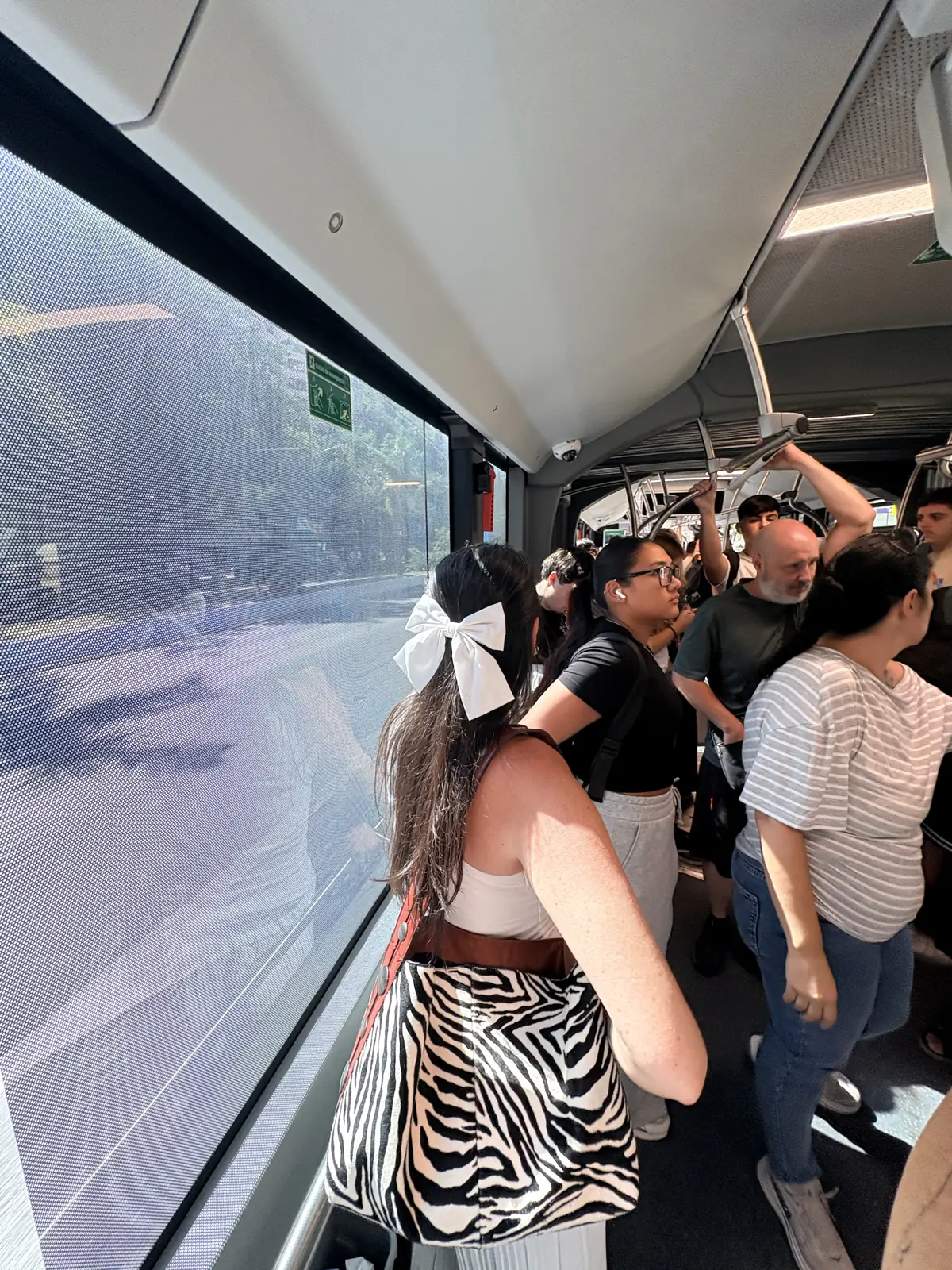
Which is a strange thing to admit in a guide that’s just spent a whole section comparing bus and metro fares, but here’s the honest version: these days I mostly don’t take either. I only reach for public transport when I’m carrying something bulky. Otherwise I walk, or I get a taxi because it drops me right outside my door. The buses are genuinely good, but Málaga is so walkable that walking wins most of the time, and it’s often actually quicker than standing around waiting for one to show up.
A car earns its value once you’re heading out of the city, for day trips to Ronda and Nerja, or for hiking spots like Caminito del Rey. If you’d rather not drive yourself out there, a guided day trip through GetYourGuide covers Ronda and Nerja without the parking headache. If Mijas Pueblo is on the itinerary, there’s a separate guide to parking in Mijas Pueblo too, covering the free and cheap options there.
Go car-free in the city, and rent one for a few days when it’s time to go further afield, I always book through Discover Cars since they compare all the major rental companies for the best price.
Other ways to get around
Cycling the promenade out to Pedregalejo is one of the nicest ways to spend a morning here. Málaga Bici, the old public bike system, doesn’t run anymore, but private rental places have filled the gap around Soho, near Muelle Uno, and along the seafront. Grab one for a couple of hours and just follow the coast, genuinely fun once you’re past the first wobbly minute.
Electric scooters are everywhere too, all app-based, and they’re genuinely handy for the short hops that feel like one street too many to walk.
Taxis are the option that never lets you down, which is a genuinely good feeling at midnight with a suitcase. They’re easy to flag, reliable, and metered, no haggling required. Official cars are white with a blue diagonal stripe, and you’ll know one’s free by the green “Libre” light in the windscreen. There are ranks at the airport (open 24/7), at María Zambrano station, at the cruise terminal, and at Plaza de la Marina.
The tariffs:
- Weekdays, 06:00 to 22:00: €1.88 to start, €0.93 per km, €4.30 minimum
- Nights, weekends and holidays: €2.27 to start, €1.25 per km, €5.30 minimum
- Add €5.50 for airport pickup or drop-off, city centre to the airport runs around €22 in the day and €26 at night
Book through Uber, Bolt or Cabify for the cheapest fare, or Free Now and PideTaxi if you specifically want a licensed Málaga taxi. By phone, try Taxi Unión Málaga (+34 952 040 804) or Unitaxi (+34 952 333 333). For a wheelchair-accessible van, call Taxi Grande (+34 678 848 484) and book ahead.
Taxis earn their place for late-night airport runs, for the moments the ride-share apps just can’t find a driver, and for anyone travelling with heavy luggage or accessibility needs.
Get the transport sorted first, it only takes about ten minutes of reading, then spend the rest of your planning time on the good stuff: when to come (best time to visit) and what to fill the days with once you’re here, there’s genuinely so much to enjoy (things to do in Malaga).